Money laundering represents one of the most pervasive financial crimes plaguing our global economy today. Between $800 billion and $2 trillion is laundered globally each year, representing roughly 2-5% of global GDP, making it one of the largest financial threats facing governments, businesses, and citizens worldwide.
But what exactly is money laundering, and why should you care? Whether you’re a business owner, compliance professional, or simply someone interested in understanding how criminal enterprises operate, this comprehensive guide will walk you through everything you need to know about this complex financial crime and its far-reaching consequences.
What Is Money Laundering? Breaking Down the Basics
At its core, money laundering is the process criminals use to disguise the origins of illegally obtained funds, transforming “dirty money” into seemingly legitimate assets. Think of it as giving criminal proceeds a financial makeover—making stolen, trafficked, or fraudulently obtained money look like it came from legitimate business activities.
The term “money laundering” originated during the Prohibition era in the United States, when organized crime figures purchased laundromats to mix illegal profits from bootlegging with legitimate cash business revenues. While the methods have evolved dramatically since the 1920s, the fundamental goal remains unchanged: concealing the true source of illicit funds.
Why Do Criminals Launder Money?
Criminals can’t simply deposit large sums of cash from illegal activities into their bank accounts without raising red flags. Law enforcement agencies, tax authorities, and financial institutions have sophisticated monitoring systems designed to detect suspicious transactions. Money laundering allows criminals to:
- Use their illegal profits freely without attracting attention from authorities
- Avoid asset seizure by law enforcement agencies
- Evade taxation on their criminal proceeds
- Continue funding criminal operations without detection
- Invest in legitimate businesses to further expand their activities

The Three Critical Stages of Money Laundering
Understanding how money laundering works requires examining its three distinct stages. Each phase serves a specific purpose in the process of transforming illicit funds into apparently legitimate wealth.
Stage 1: Placement – Introducing Dirty Money Into the System
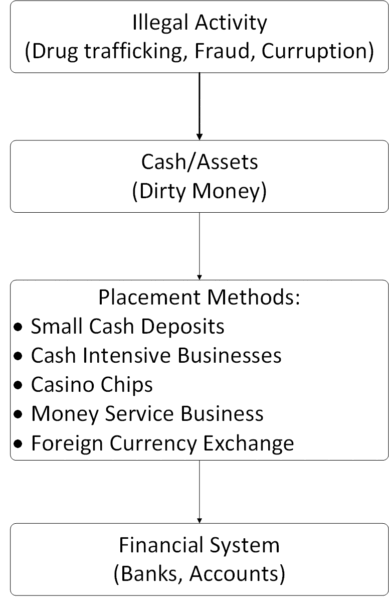
Placement represents the most vulnerable stage for money launderers. This is when criminals first introduce their illegal cash into the legitimate financial system—and it’s where they face the highest risk of detection.
Common Placement Techniques:
Smurfing (Structuring): Breaking large amounts of cash into smaller deposits below reporting thresholds (typically $10,000 in the United States) to avoid triggering automatic alerts. Multiple “smurfs” or accomplices deposit these smaller amounts across different banks and locations.
Cash-Intensive Businesses: Criminals purchase or operate businesses with high cash volumes—restaurants, car washes, vending machines, or convenience stores—mixing illegal proceeds with legitimate revenue.
Casino Laundering: Converting cash into casino chips, gambling briefly or minimally, then cashing out with a receipt showing apparent gambling winnings.
Currency Exchange Services: Using money service businesses to convert cash into different currencies, money orders, or prepaid cards that can be easily transported or transferred.
PLACEMENT STAGE WORKFLOW
Stage 2: Layering – Obscuring the Money Trail
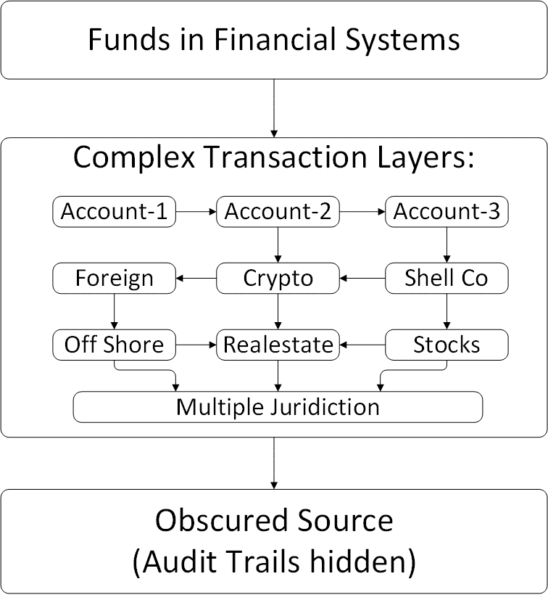
Once funds enter the financial system, criminals move to the layering stage—arguably the most complex phase of money laundering. The objective here is creating multiple layers of transactions to distance the money from its illegal source and make tracing virtually impossible.
Layering Strategies Include:
Electronic Transfers: Moving money rapidly through multiple accounts, often across different countries and jurisdictions, creating a confusing web of transactions.
Shell Companies: Establishing fictitious businesses that exist only on paper, using them to create false invoices, loans, and transactions that obscure true ownership and fund origins.
Offshore Accounts: Transferring funds to countries with strong banking secrecy laws or weak anti-money laundering regulations, exploiting jurisdictional gaps.
Cryptocurrency Trading: Cryptocurrency-based money laundering surged in 2025, with an estimated $24.2 billion in illicit crypto transactions linked to laundering activities, taking advantage of the perceived anonymity of digital currencies.
Trade-Based Money Laundering: Manipulating trade invoices by over-invoicing or under-invoicing goods to move money across borders while making it appear as legitimate business transactions.
Real Estate Purchases: Buying and selling properties multiple times to create the appearance of legitimate capital gains while obscuring the funds’ criminal origins.
LAYERING STAGE WORKFLOW
Stage 3: Integration – Making Dirty Money Look Clean
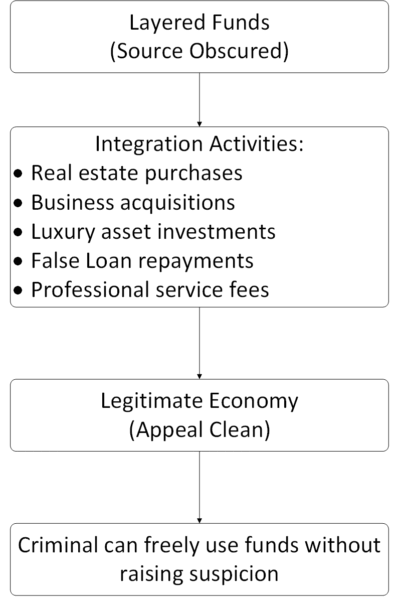
Integration is the final stage where laundered funds re-enter the legitimate economy, appearing to come from lawful sources. By this point, the money has been sufficiently distanced from its criminal origins, making detection extremely difficult.
Integration Methods:
Real Estate Investments: Purchasing luxury properties, commercial buildings, or development projects with laundered funds, then selling them to generate apparently legitimate capital gains.
Business Investments: Acquiring or investing in legitimate businesses, using them to generate clean income streams while hiding the true source of the initial investment capital.
Luxury Purchases: Buying high-value items like art, jewelry, yachts, or exotic vehicles, which can later be sold through legitimate channels.
False Invoicing: Creating fictitious invoices for professional services, consulting fees, or business expenses to justify large payments that are actually laundered funds.
Loan Schemes: Taking out “loans” from shell companies controlled by the launderer, making illegal funds appear as borrowed capital that doesn’t require source explanation.
Integration Stage
The Staggering Global Impact of Money Laundering
The consequences of money laundering extend far beyond enabling criminals to enjoy their ill-gotten gains. This financial crime creates ripple effects throughout economies, societies, and governance systems worldwide.
Economic Devastation
In 2024, between $2.22 trillion to $5.54 trillion flowed through the global financial system undetected, representing an enormous drain on legitimate economic activity. This massive movement of illicit funds:
Distorts Market Competition: Criminals can undercut legitimate businesses by accepting lower profit margins, having acquired their operating capital illegally without needing to repay loans or investors.
Inflates Asset Prices: When criminals pour laundered money into real estate, it can artificially inflate property prices, as seen in Vancouver, Canada, which created a housing crisis where local families found themselves unable to afford homes.
Reduces Tax Revenue: Laundered money evades taxation, depriving governments of billions in potential revenue that could fund healthcare, education, infrastructure, and public services.
Destabilizes Financial Institutions: Banks caught in money laundering schemes face massive fines, as exemplified by HSBC, which was fined $1.9 billion in 2012 for allowing drug cartels to launder money through its branches.
Geographic Distribution of Money Laundering
The money laundering problem isn’t evenly distributed globally. North America generated nearly 35% of money laundering activities across the globe in 2024, with the USA being the most affected country, while Europe accounted for 25%, and the Asia-Pacific region increased to 22%.
United States: Approximately $300 billion is laundered annually through U.S. financial systems, representing 15-38% of global money laundering activity.
European Union: The EU loses approximately €110 billion annually to money laundering, with money laundering making up 27.5% of all anti-money laundering events in the region.
Asia-Pacific: The region handles an estimated $1.5 trillion in illicit flows annually, driven significantly by increasing cryptocurrency activities in countries like China and India.
Social Consequences
Beyond economic impacts, money laundering enables and perpetuates serious social harms:
Fuels Organized Crime: Drug trafficking continues to be the largest source of laundered funds, accounting for 30-40% of all global money laundering cases.
Supports Human Trafficking: Significant portions of laundered funds originate from human trafficking operations, perpetuating modern slavery.
Enables Corruption: Money laundering provides corrupt officials with methods to hide bribes and stolen public funds, undermining democratic institutions and public trust.
Facilitates Terrorism Financing: Terrorist organizations use money laundering techniques to fund their operations while evading detection.
How Businesses and Governments Fight Back: Anti-Money Laundering (AML) Efforts
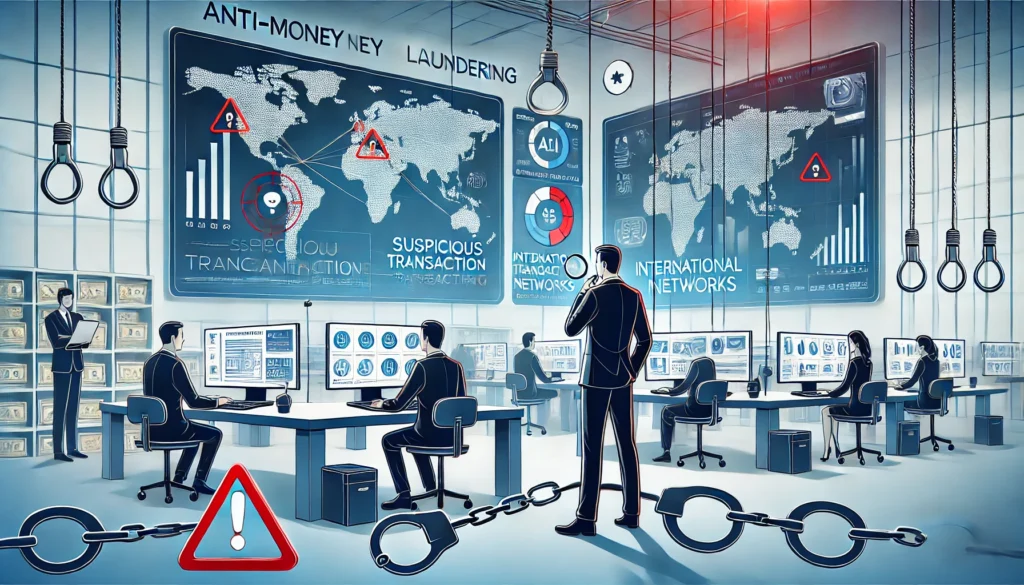
The global community has responded to the money laundering threat with increasingly sophisticated anti-money laundering frameworks, technologies, and international cooperation.
Regulatory Frameworks and Global Standards
Financial Action Task Force (FATF): The international standard-setting body for anti-money laundering efforts provides recommendations that countries implement to combat money laundering and terrorist financing.
Bank Secrecy Act (BSA): U.S. legislation requiring financial institutions to assist government agencies in detecting and preventing money laundering.
Anti-Money Laundering Directives (AMLD): The European Union has implemented multiple directives, with the Sixth Anti-Money Laundering Directive (6AMLD) enhancing consistency across member states.
Beneficial Ownership Registries: Many jurisdictions now require disclosure of ultimate beneficial owners of companies and trusts, making it harder to hide behind shell companies.
Technology-Driven Detection
The anti-money laundering software market is expected to grow at a CAGR of 14.8% from 2024 to 2033, reaching $10.3 billion by 2033, reflecting the increasing investment in technological solutions.
Artificial Intelligence and Machine Learning: These technologies analyze transaction patterns, identify anomalies, and flag suspicious activities with unprecedented accuracy.
Blockchain Analytics: Despite cryptocurrency’s association with money laundering, blockchain technology actually provides an immutable transaction record that sophisticated analytics tools can trace.
Biometric Verification: Advanced identity verification technologies make it harder for criminals to create false identities or use money mules.
Transaction Monitoring Systems: Real-time monitoring of financial transactions automatically flags patterns consistent with money laundering behaviors.
Know Your Customer (KYC) Requirements
Financial institutions must implement robust KYC procedures:
- Customer Identification: Verifying the identity of customers opening accounts
- Customer Due Diligence: Understanding the nature of customer relationships and transaction patterns
- Enhanced Due Diligence: Additional scrutiny for high-risk customers or those from high-risk jurisdictions
- Ongoing Monitoring: Continuous assessment of customer transactions for suspicious activity
Enforcement and Penalties
Authorities worldwide confiscated more than $150 billion in illegal money in 2024, improving from $120 billion taken out in 2023, demonstrating increasing enforcement effectiveness.
In 2023, banks and financial organizations spent an estimated $181 billion on AML programs, including compliance officers, AI-driven monitoring systems, and enhanced transaction screening capabilities.
The penalties for money laundering violations have become increasingly severe. U.S. authorities handed out penalties worth $14 billion in connection to AML violations in 2022, highlighting the significant financial risks of non-compliance.
Red Flags: Identifying Potential Money Laundering
Businesses and individuals should be aware of warning signs that might indicate money laundering activities:
Transaction-Based Red Flags
- Unusual Transaction Patterns: Frequent deposits just below reporting thresholds (structuring)
- Rapid Movement of Funds: Money quickly transferred between multiple accounts or jurisdictions
- Inconsistent Transactions: Business transactions inconsistent with the stated business type or customer profile
- Cash Dominance: Unusual preference for cash transactions when electronic payments would be more practical
- Round Numbers: Frequent transactions in round numbers (e.g., exactly $50,000) rather than varying amounts
Customer Behavior Red Flags
- Reluctance to Provide Information: Customers unwilling to provide standard identification or source of funds documentation
- Unnecessary Complexity: Using unnecessarily complex transaction structures for straightforward business needs
- Geographic Inconsistencies: Transactions involving high-risk jurisdictions without clear business rationale
- Inconsistent Wealth: Customer’s apparent wealth or lifestyle inconsistent with known income sources
- Frequent Address Changes: Regular changes of address or business location without reasonable explanation
Business-Specific Red Flags
- Shell Company Characteristics: Companies with no apparent business operations, employees, or physical presence
- Frequent Ownership Changes: Businesses that change ownership repeatedly in short timeframes
- No Clear Business Purpose: Companies whose stated business purpose doesn’t align with their transaction patterns
- Related Party Transactions: Excessive transactions between apparently unrelated entities with common ownership
Emerging Trends and Future Challenges
The money laundering landscape continues to evolve as criminals adapt to new technologies and enforcement measures.
Cryptocurrency and Digital Assets
Bitcoin remains the cryptocurrency of choice for money laundering, with 54% of crypto-laundered funds in 2025 being processed through Bitcoin mixers. Additionally, Decentralized Finance (DeFi) platforms saw a 94% increase in laundering activities in 2025, with cybercriminals exploiting the lack of regulatory oversight.
Non-Fungible Tokens (NFTs)
The NFT market has emerged as a new frontier for money laundering, allowing criminals to purchase digital art and collectibles with illicit funds, then resell them to convert dirty money into clean proceeds.
Trade-Based Money Laundering Growth
International trade remains a significant vulnerability, with criminals manipulating invoices and shipping documents to move billions across borders while appearing to conduct legitimate business.
Mobile Money and Digital Payments
The proliferation of mobile payment systems, particularly in developing markets, creates new opportunities for laundering activities while challenging traditional monitoring approaches.
What You Can Do: Protecting Your Business and Community
Whether you’re a business owner, compliance professional, or concerned citizen, you have a role to play in combating money laundering.
For Business Owners
- Implement Robust AML Programs: Develop comprehensive policies and procedures aligned with regulatory requirements
- Train Your Team: Ensure all employees understand money laundering red flags and reporting obligations
- Conduct Due Diligence: Thoroughly vet customers, suppliers, and business partners
- Monitor Transactions: Implement or subscribe to transaction monitoring systems appropriate for your risk level
- Report Suspicions: File Suspicious Activity Reports (SARs) when warranted—your report could prevent serious crimes
For Financial Professionals
- Stay Educated: Keep current with evolving money laundering techniques and regulatory requirements
- Leverage Technology: Utilize AI-powered tools to enhance detection capabilities
- Maintain Skepticism: Question transactions that don’t make business sense, even from established customers
- Document Everything: Maintain thorough records of due diligence efforts and decision-making processes
- Collaborate: Share information with law enforcement and other financial institutions within legal frameworks
For Individuals
- Be Vigilant: Report suspicious activities you observe in your community
- Verify Businesses: Research companies before conducting significant transactions
- Protect Your Identity: Prevent criminals from using your identity to open accounts or conduct transactions
- Ask Questions: If something seems too good to be true financially, investigate before participating
Conclusion: The Ongoing Battle Against Financial Crime
Money laundering remains one of the most significant threats to global financial stability and security. With trillions of dollars flowing through illicit channels annually, this crime enables everything from drug trafficking to terrorism while destabilizing economies and undermining legitimate businesses.
However, the fight against money laundering is making progress. Enhanced regulatory frameworks, technological innovation, increased enforcement, and growing international cooperation are making it increasingly difficult for criminals to launder their proceeds successfully. The AML software market’s rapid growth demonstrates the commitment of financial institutions and governments to combating this threat.
Understanding money laundering—its stages, methods, impacts, and prevention strategies—is crucial for anyone involved in business, finance, or governance. As criminals continue evolving their techniques, our knowledge, vigilance, and commitment to compliance must evolve equally quickly.
The battle against money laundering requires participation from all sectors of society. Whether through implementing strong AML controls in your business, reporting suspicious activities, or simply staying informed about emerging threats, everyone has a role in protecting our financial systems from those who would exploit them.
Frequently Asked Questions (FAQs)
- What exactly is money laundering in simple terms?
- A: Money laundering is the process of making illegally obtained money appear legitimate. Criminals take “dirty money” from illegal activities like drug trafficking or fraud and run it through legal financial systems to hide its criminal origins, making it seem like legitimate income.
- What are the three stages of money laundering?
- A: The three stages are: (1) Placement—introducing illegal cash into the financial system; (2) Layering—creating complex transactions to obscure the money’s source; and (3) Integration—reintroducing the laundered funds into the economy as apparently legitimate wealth.
- How much money is laundered globally each year?
- A: Between $800 billion and $2 trillion is laundered globally each year, representing approximately 2-5% of global GDP. This makes money laundering one of the largest categories of international financial crime.
- What businesses are most vulnerable to money laundering?
- A: Cash-intensive businesses (restaurants, car washes, casinos), real estate, precious metals dealers, cryptocurrency exchanges, and trade-based businesses are particularly vulnerable. Any business handling large cash volumes or high-value transactions faces heightened risk.
- Is cryptocurrency commonly used for money laundering?
- A: Yes, cryptocurrency is increasingly used for money laundering, with an estimated $24.2 billion in illicit crypto transactions linked to laundering activities in 2025. However, blockchain technology also makes tracing these transactions possible with specialized analytics tools.
- What happens if a business fails to prevent money laundering?
- A: Businesses can face severe penalties including massive fines (potentially billions of dollars), criminal prosecution of executives, revocation of operating licenses, reputational damage, and civil liability. In 2022, U.S. authorities alone imposed $14 billion in AML violation penalties.
- How do banks detect money laundering?
- A: Banks use transaction monitoring systems powered by artificial intelligence to identify suspicious patterns, conduct customer due diligence to verify identities and business purposes, file Suspicious Activity Reports when warranted, and maintain comprehensive records of customer transactions and relationships.
- What is “smurfing” in money laundering?
- A: Smurfing, also called structuring, is when criminals break large amounts of cash into smaller deposits below reporting thresholds (typically $10,000) to avoid triggering automatic alerts. Multiple people (“smurfs”) make these deposits across different banks and locations.
- Can individuals be prosecuted for unknowingly helping launder money?
- A: While knowledge of the illegal nature of funds is typically required for criminal prosecution, individuals can still face civil penalties and legal complications. Banks and businesses have responsibilities to implement reasonable controls and report suspicious activities, regardless of knowledge of specific crimes.
- What is the role of the Financial Action Task Force (FATF)?
- A: The FATF is an international organization that sets global standards for combating money laundering and terrorist financing. It provides recommendations that countries adopt, monitors implementation, and identifies high-risk jurisdictions with weak anti-money laundering controls.