Introduction: Blockchain in 2026 — Far Beyond Bitcoin

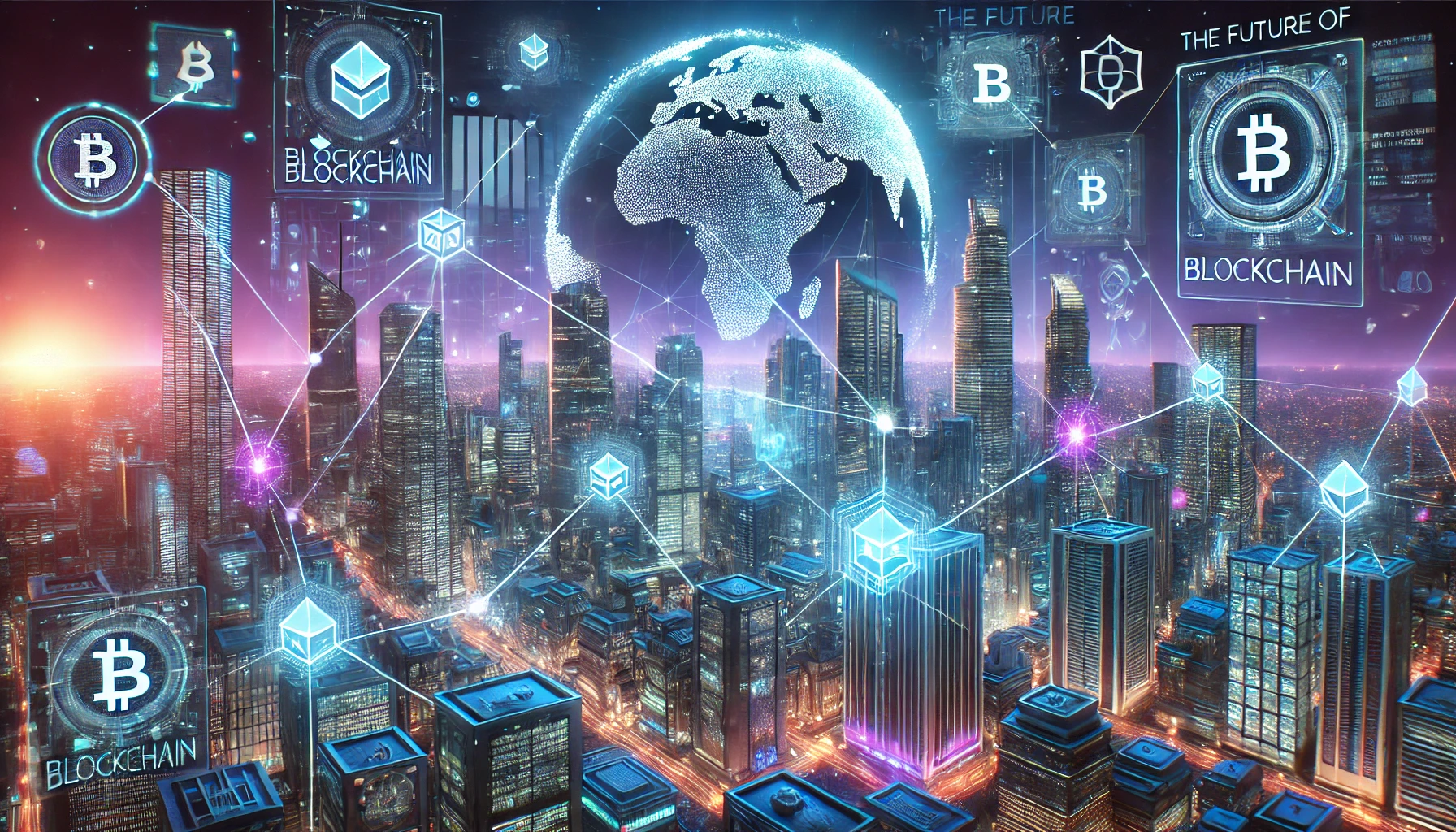
When most people hear blockchain evolution 2026, they still picture cryptocurrency trading charts. But the reality in 2026 is far more interesting. Blockchain has quietly grown from a niche financial experiment into one of the most consequential infrastructure technologies of our era — reshaping supply chains, identity systems, healthcare records, and even how governments operate. If you haven’t updated your mental model of blockchain recently, this guide will bring you fully up to speed on where the technology stands, where it’s heading, and why it matters more now than ever.
According to Grand View Research, the global blockchain market was valued at over $17 billion in 2023 and is projected to grow at a compound annual growth rate (CAGR) of 87.7% through 2030. In 2026, that trajectory is well underway — and the signs are everywhere.
A Brief History: How We Got Here
To understand where blockchain is going, it helps to know where it’s been. The technology launched in 2009 with Bitcoin — a decentralised peer-to-peer payment system that eliminated the need for banks to verify transactions. Blockchain was its underlying infrastructure: a distributed ledger that records every transaction permanently and transparently across thousands of nodes worldwide.
The second major milestone came with Ethereum in 2015, which introduced smart contracts — self-executing agreements written in code. This unlocked an entirely new category of applications: decentralised finance (DeFi), non-fungible tokens (NFTs), and decentralised autonomous organisations (DAOs). By 2020–2022, the ecosystem had exploded in both activity and speculation.
Then came the correction. The crypto winter of 2022–2023 wiped out trillions in speculative value, but it also cleared the noise. What remained in 2024 and beyond was something more durable: enterprise adoption, regulatory frameworks, and genuine real-world utility.
Key Blockchain Trends Shaping 2026

1. Institutional and Enterprise Adoption at Scale
Enterprise blockchain is no longer a pilot programme. In 2026, major financial institutions, logistics companies, and governments are running production-grade blockchain infrastructure. JPMorgan’s Onyx platform processes billions in daily transactions. Walmart and Maersk use blockchain to track food safety and shipping containers in real time. The tone has shifted from "should we explore this?" to "how do we scale what's working?"
2. Layer 2 Solutions and the Scalability Breakthrough
One of the biggest criticisms of early blockchain was speed and cost. Bitcoin processes roughly 7 transactions per second. Ethereum’s base layer managed around 15. For global-scale applications, this was unworkable. Layer 2 solutions — networks that process transactions off the main chain and then settle them in bulk — have largely solved this.
In 2026, Ethereum’s Layer 2 ecosystem (Arbitrum, Optimism, zkSync, Base) handles millions of transactions per second at fractions of a cent in fees. This has made decentralised applications genuinely usable for everyday consumers, not just crypto enthusiasts.
3. Zero-Knowledge Proofs: Privacy Meets Transparency
Zero-knowledge (ZK) proofs are arguably the most technically significant blockchain trend of this era. A ZK proof allows one party to prove to another that they know something — without revealing the information itself. Applied to blockchain, this means you can verify a transaction is legitimate without exposing the sender, receiver, or amount.
In 2026, ZK technology is being deployed in financial privacy, digital identity verification, and regulatory compliance. Banks can prove solvency without revealing their full balance sheet. Citizens can prove eligibility for services without handing over sensitive documents.
4. Real-World Asset Tokenisation
One of the most consequential future of blockchain applications is the tokenisation of real-world assets (RWAs). In simple terms: representing ownership of physical or traditional financial assets — real estate, bonds, commodities, art, private equity — as tokens on a blockchain.
By 2026, major asset managers including BlackRock and Franklin Templeton have tokenised funds on public blockchains. The potential is enormous: fractional ownership of assets previously only accessible to institutions, 24/7 global trading of traditionally illiquid investments, and dramatic reductions in settlement times from days to seconds.
5. Blockchain and Artificial Intelligence Convergence
The intersection of blockchain and AI is one of 2026’s defining technology themes. Blockchain provides the verifiable data provenance and audit trails that AI systems desperately need — combating hallucinations, ensuring training data integrity, and creating transparent model lineage. Meanwhile, AI is being used to optimise smart contract logic, detect on-chain fraud patterns, and automate complex DeFi strategies.
Projects like Fetch.ai and Ocean Protocol are building marketplaces where AI agents transact autonomously on blockchain rails — a glimpse of a machine-to-machine economy still in its early stages.
6. Central Bank Digital Currencies (CBDCs)
More than 130 countries are now researching or piloting central bank digital currencies — government-issued digital money built on blockchain or distributed ledger technology. The digital yuan (e-CNY) has already processed hundreds of billions in transactions in China. The European Central Bank is piloting a digital euro. In 2026, CBDCs represent the most significant potential reshaping of global monetary infrastructure since the end of the Bretton Woods system.
Real-World Use Cases in 2026
Supply Chain and Trade Finance
Blockchain’s ability to create an immutable, shared record visible to all parties in a supply chain has transformed logistics. In 2026, food traceability — knowing exactly where a product came from, every step of its journey — is table stakes for major retailers. When a contamination event occurs, blockchain reduces the time to identify the source from days to seconds.
Digital Identity and Self-Sovereign Identity
The concept of self-sovereign identity (SSI) gives individuals control over their own digital credentials — without relying on any single company or government database. In 2026, pilots in the EU, Singapore, and several US states allow citizens to store verified credentials (driving licences, qualifications, health records) in blockchain-based digital wallets. They share only what’s needed, verified instantly, without exposing the underlying data.
Healthcare and Medical Records
Patient data fragmentation is a persistent problem in healthcare. Blockchain-based health records allow patients to own and selectively share their medical history across providers, reducing duplicate tests, medication errors, and administrative waste. In 2026, several national health systems are testing blockchain-linked patient records with patients holding the private keys to their own data.
Decentralised Finance (DeFi) — Maturing Fast
After the speculative excess of 2021–2022, DeFi has matured considerably. In 2026, decentralised lending, borrowing, and trading protocols process hundreds of billions in monthly volume. Crucially, institutional-grade DeFi — with proper KYC, compliance frameworks, and risk management — has emerged, bridging the gap between traditional finance and on-chain infrastructure.
Challenges Still Facing Blockchain in 2026
Despite remarkable progress, blockchain technology continues to face meaningful headwinds:
- Regulatory fragmentation: Different jurisdictions have dramatically different frameworks for crypto assets, smart contracts, and digital identity. Building truly global blockchain applications remains legally complex.
- User experience: Managing private keys, understanding gas fees, and navigating wallet interfaces remains a significant barrier to mass consumer adoption. The UX gap between blockchain apps and traditional apps is narrowing but has not closed.
- Energy consumption: While Ethereum’s shift to Proof of Stake in 2022 reduced its energy use by 99.9%, Bitcoin’s Proof of Work consensus still consumes as much electricity as some medium-sized countries. This remains a reputational and environmental concern.
- Interoperability: Hundreds of separate blockchain networks exist, each with different architectures and standards. Moving assets and data seamlessly between chains remains technically complex, though cross-chain bridges and protocols like Polkadot and Cosmos are making progress.
- Security: Smart contract vulnerabilities have resulted in billions in losses over the past decade. Formal verification and security auditing are improving but remain imperfect.
The Future Outlook: What Comes Next
Looking beyond 2026, several developments are likely to define the next chapter of blockchain evolution:
- Invisible blockchain: Just as most internet users don’t think about TCP/IP, most blockchain users of the future won’t know (or need to know) they’re using blockchain. It will become embedded infrastructure.
- Regulatory clarity: The EU’s MiCA regulation, US stablecoin legislation, and emerging global frameworks will provide the legal certainty enterprises need to deploy at full scale.
- Quantum resistance: Post-quantum cryptography will need to be integrated into blockchain protocols before quantum computing reaches the scale needed to crack current encryption standards.
- Full tokenisation of financial markets: The logic of tokenising assets — faster settlement, greater liquidity, fractional access — will eventually extend to nearly all financial instruments.
Frequently Asked Questions
What is blockchain technology in simple terms?
Blockchain is a shared digital ledger that records transactions across many computers simultaneously. Once a record is added, it cannot be changed — making it transparent and tamper-resistant without needing a central authority to manage it.
How has blockchain evolved since Bitcoin?
Bitcoin introduced the core concept in 2009. Ethereum added programmable smart contracts in 2015. Since then, thousands of blockchains have launched with specialised capabilities — from enterprise permissioned networks to high-speed public chains optimised for specific use cases like gaming, finance, or identity.
What are the biggest blockchain trends in 2026?
The leading trends are Layer 2 scalability solutions, zero-knowledge proofs for privacy, real-world asset tokenisation, AI and blockchain convergence, and central bank digital currencies. Enterprise adoption has also shifted from pilot to production at meaningful scale.
What is a Layer 2 blockchain?
A Layer 2 is a secondary network built on top of a main blockchain (like Ethereum). It processes transactions faster and cheaper off the main chain, then records summarised results back to the main chain for security. Examples include Arbitrum, Optimism, and zkSync.
What are zero-knowledge proofs?
Zero-knowledge proofs are a cryptographic method that lets you prove you know something without revealing the information itself. In blockchain, they enable private, verifiable transactions — you can prove a payment is valid without exposing the sender, receiver, or amount.
What is real-world asset tokenisation?
Tokenisation is the process of representing ownership of a physical or financial asset — real estate, bonds, commodities — as a digital token on a blockchain. It enables fractional ownership, 24/7 trading, and faster settlement for assets that were previously illiquid or inaccessible to most investors.
Are CBDCs the same as cryptocurrency?
No. Central bank digital currencies (CBDCs) are issued and backed by governments — they are digital versions of existing national currencies. Cryptocurrencies like Bitcoin are decentralised with no government backing. CBDCs may use similar underlying technology but are fundamentally different in nature.
Is blockchain the same as cryptocurrency?
No. Blockchain is the underlying technology — a distributed ledger. Cryptocurrency is one application built on top of it. Many blockchain applications have nothing to do with cryptocurrency, including supply chain tracking, digital identity, and healthcare records.
What industries are being most disrupted by blockchain in 2026?
Financial services (payments, lending, asset management), supply chain and logistics, healthcare, digital identity, and government services are seeing the deepest impact. Energy trading and intellectual property management are also emerging areas of significant activity.
What are the main challenges of blockchain adoption?
The main barriers remain regulatory fragmentation across jurisdictions, complex user experiences compared to traditional apps, energy consumption concerns (particularly for Proof of Work networks), interoperability between different chains, and smart contract security vulnerabilities.
What is the future of blockchain technology?
Blockchain will increasingly become invisible infrastructure — embedded in financial systems, supply chains, and identity frameworks without end users needing to interact with it directly. Regulatory clarity, quantum-resistant cryptography, and full tokenisation of financial markets are the key milestones ahead.
Conclusion: Blockchain’s Most Important Chapter Is Just Beginning
The blockchain story in 2026 is not the story of volatile tokens and overnight millionaires. It is the quieter, more durable story of infrastructure maturing into something genuinely transformative. Zero-knowledge proofs protecting privacy at scale. Real-world assets unlocking liquidity for millions. Central banks reimagining money itself. AI agents transacting autonomously on decentralised rails.
The technology has survived its hype cycles and its crashes. What remains is a foundation — imperfect, still evolving, but increasingly indispensable. The organisations and individuals who understand where blockchain is heading will be far better positioned for the decade ahead than those still dismissing it as a passing fad.
The evolution is not complete. It has barely begun.
Stay Informed on Blockchain and Emerging Tech
Want to stay ahead of the curve on blockchain trends, AI developments, and the technologies reshaping business and finance? Subscribe to the Petafusion newsletter — sharp, practical insights delivered weekly with no fluff. Join thousands of forward-thinking readers who rely on us to cut through the noise.