The cloud computing landscape is experiencing unprecedented transformation. As we navigate through 2025, organizations worldwide are witnessing a fundamental shift in how they approach digital infrastructure, data management, and technological innovation. With global spending on public cloud services forecasted to reach $723.4 billion in 2025, up from $595.7 billion in 2024, it’s clear that cloud adoption isn’t just a trend—it’s becoming the backbone of modern business operations.
But what exactly lies ahead for cloud computing? How will emerging technologies reshape the way we think about digital transformation? In this comprehensive exploration, we’ll dive deep into the most significant trends that will define the cloud computing ecosystem over the next decade.
The Current State of Cloud Computing: Setting the Stage
Before we peer into the future, it’s essential to understand where we stand today. The cloud computing market has reached extraordinary maturity levels, yet it continues to evolve at breakneck speed. The U.S. cloud computing market was valued at $431.76 billion in 2024 and is projected to reach $2,992.81 billion by 2034, growing at a remarkable CAGR of 21.36%.
This explosive growth isn’t happening in a vacuum. Organizations across industries are realizing that cloud computing isn’t just about cost savings anymore—it’s about enabling innovation, improving agility, and creating competitive advantages that were previously impossible to achieve.
AI-Driven Cloud Optimization: The Intelligence Revolution
Machine Learning Integration Becomes Standard Practice
Artificial Intelligence is no longer a luxury add-on to cloud services—it’s becoming an integral part of how cloud infrastructure operates. In 2025, we’re witnessing AI-driven optimization becoming the norm rather than the exception. Cloud providers are embedding machine learning algorithms directly into their platforms to automatically optimize resource allocation, predict usage patterns, and prevent potential system failures before they occur.
The implications are profound. Organizations can now expect their cloud infrastructure to learn from usage patterns and automatically adjust resources during peak and low-demand periods. This isn’t just about cost optimization—it’s about creating self-healing, adaptive systems that require minimal human intervention.
Retrieval-Augmented Generation (RAG) Services Transform Business Operations
Forrester predicts that in 2025, every major hyperscaler will launch RAG-related solutions to build accuracy into their generative AI services. This represents a significant shift from traditional AI models to more sophisticated, context-aware systems that can provide accurate, real-time information retrieval and generation.
RAG services are revolutionizing how businesses handle knowledge management, customer service, and content creation. Instead of relying on static databases or pre-trained models, organizations can now deploy AI systems that dynamically retrieve and generate content based on current, relevant information.

Edge Computing Revolution: Bringing Intelligence Closer to Data
The Rise of Edge AI and Real-Time Processing
Edge computing is experiencing explosive growth, and the integration with AI is particularly exciting. The Edge AI software market is projected to grow from $1.92 billion in 2024 to $7.19 billion by 2030, driven by the increasing demand for real-time analytics and decision-making capabilities.
This growth is fundamentally changing how we think about data processing. Instead of sending raw data to centralized cloud servers, organizations are increasingly processing information at the edge—closer to where it’s generated. This approach dramatically reduces latency, improves privacy, and enables real-time responses that were previously impossible.
Serverless Edge Computing Enhances IoT Capabilities
Serverless functions are increasingly being used to deploy machine learning models that perform tasks like image classification, predictive analytics, and natural language processing directly at the edge. This evolution enables near-instant insights without the need to transmit raw data to the cloud, optimizing both performance and security.
The implications for Internet of Things (IoT) applications are particularly significant. Smart cities, autonomous vehicles, industrial automation, and healthcare monitoring systems can now operate with unprecedented efficiency and responsiveness.
Multi-Cloud and Hybrid Strategies: The New Normal
Strategic Vendor Diversification
By 2025, cloud migration and the adoption of multi-cloud strategies are expected to significantly reshape how organizations operate. This isn’t just about avoiding vendor lock-in—it’s about leveraging the best capabilities from different cloud providers while maintaining flexibility and resilience.
Organizations are discovering that different cloud providers excel in different areas. Rather than committing to a single vendor, forward-thinking companies are adopting multi-cloud strategies that allow them to optimize performance, costs, and capabilities across different platforms.
Hybrid Cloud Architectures Enable Seamless Integration
The future of cloud computing isn’t about choosing between on-premises and cloud infrastructure—it’s about creating seamless hybrid environments that combine the best of both worlds. These architectures enable organizations to maintain sensitive data on-premises while leveraging cloud capabilities for scalability and innovation.
Hybrid cloud strategies are particularly valuable for organizations in highly regulated industries, where compliance requirements may prevent full cloud migration while still allowing them to benefit from cloud innovations.
Platform-as-a-Service (PaaS) Acceleration
Container Orchestration Drives Growth
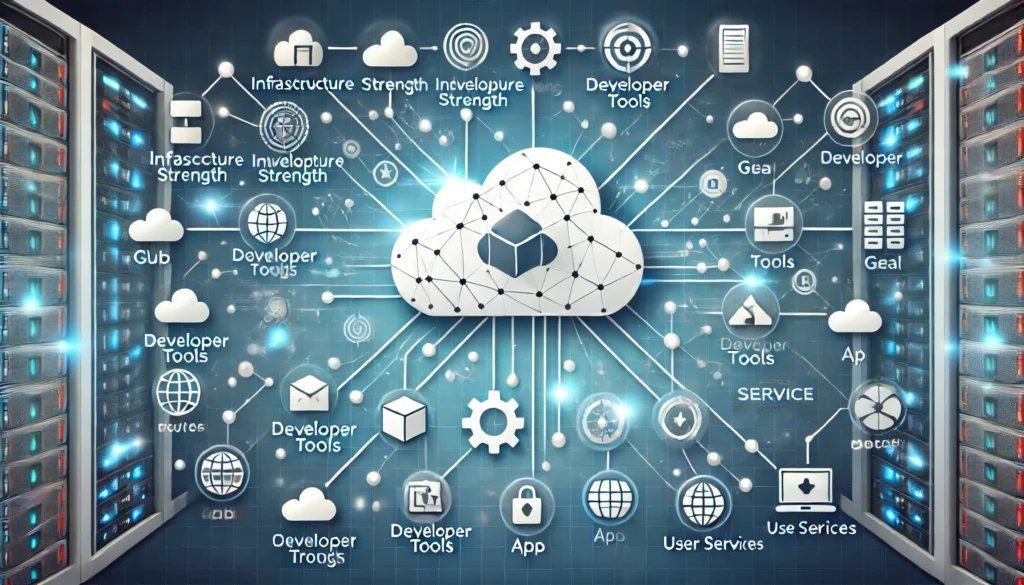
Platform-as-a-Service is forecast to grow at 23.2% from 2025-2030, the fastest pace among service models. This growth is largely fueled by container orchestration technologies that make it easier for developers to build, deploy, and manage applications at scale.
Container technologies like Kubernetes and Docker have matured to the point where they’re becoming the default choice for application deployment. This trend is enabling organizations to achieve unprecedented levels of portability and scalability while simplifying complex deployment processes.
Developer Productivity Revolution
According to the 2025 State of Dapr Report, 96% of developers save time using cloud-native tools, and 60% report productivity increases of 30% or more. This represents a fundamental shift in how development teams approach application building and deployment.
Modern PaaS offerings are abstracting away much of the complexity traditionally associated with infrastructure management, allowing developers to focus on creating value rather than managing systems. This productivity boost is driving adoption across organizations of all sizes.
Industry-Specific Cloud Transformations
Financial Services Lead Cloud Investment
The financial services industry is expected to increase cloud spending by 25% in 2025. This significant investment reflects the industry’s recognition that cloud computing is essential for maintaining competitive advantages in an increasingly digital financial landscape.
Financial institutions are leveraging cloud technologies for everything from fraud detection and risk management to customer experience enhancement and regulatory compliance. The ability to process vast amounts of data in real-time while maintaining security and compliance standards is driving this substantial investment.
Education and Retail Sectors Embrace Cloud-First Strategies
80% of educational institutions are anticipated to rely on cloud-based learning management systems, while the retail sector is projected to boost cloud-based inventory management by 35%. These statistics highlight how different industries are finding unique value propositions in cloud technologies.
The education sector’s embrace of cloud-based learning management systems reflects the permanent changes brought about by remote and hybrid learning models. Similarly, retail’s focus on cloud-based inventory management demonstrates the industry’s need for real-time visibility and agility in supply chain operations.
Security and Compliance Evolution
Third-Party Security Platforms Gain Prominence
Forrester predicts that by the end of 2025, around 40% of organizations will rely on third-party specialized security platforms rather than their hyperscaler’s native security capabilities. This trend reflects the growing complexity of security requirements and the need for specialized expertise.
Organizations are recognizing that security is too critical to rely solely on built-in cloud provider solutions. Instead, they’re adopting best-of-breed security platforms that can provide more comprehensive protection across multi-cloud environments.
Cyberstorage and Data Protection Innovation
Emerging trends include “cyberstorage,” which protects data by fragmenting and distributing it across multiple locations. This innovative approach to data protection represents a new paradigm in how organizations think about security and resilience.
By fragmenting and distributing data across multiple locations and platforms, organizations can achieve unprecedented levels of protection against both cyber threats and physical disasters.
Sustainability and Green Cloud Computing
Environmental Responsibility Drives Innovation
Sustainability is becoming a critical factor in cloud computing decisions. Organizations are increasingly evaluating cloud providers based on their environmental impact and commitment to renewable energy. This trend is driving innovation in energy-efficient data centers, carbon-neutral cloud services, and sustainable computing practices.
Cloud providers are responding by investing heavily in renewable energy sources, improving data center efficiency, and developing tools that help customers optimize their carbon footprints. This focus on sustainability isn’t just about corporate responsibility—it’s becoming a competitive differentiator.
Green Cloud Initiatives Shape Market Dynamics
The future of cloud computing includes a strong emphasis on environmental stewardship. Organizations are recognizing that cloud computing can actually reduce their overall environmental impact when implemented correctly, as shared cloud resources are typically more efficient than individual on-premises infrastructures.
Quantum Computing Integration
Quantum-Classical Hybrid Systems Emerge
As we look beyond 2025, quantum computing integration with classical cloud systems represents one of the most exciting frontiers. While full-scale quantum computers remain specialized tools, quantum-classical hybrid systems are beginning to offer practical advantages for specific computational problems.
These hybrid systems allow organizations to leverage quantum computing capabilities for problems like optimization, cryptography, and complex simulations while maintaining traditional cloud infrastructure for standard operations.
Preparing for the Quantum Future
Organizations are beginning to prepare for a quantum-enabled future by developing quantum-ready applications and exploring quantum computing services offered by major cloud providers. This preparation is essential as quantum computing capabilities continue to mature and become more accessible.
Final Thoughts
Embracing the Cloud-Powered Future
The future of cloud computing extends far beyond simple infrastructure migration. As we’ve explored throughout this comprehensive analysis, 2025 and beyond will be defined by intelligent, adaptive, and increasingly distributed computing environments that fundamentally transform how organizations operate and innovate.
The convergence of AI-driven optimization, edge computing intelligence, multi-cloud strategies, and emerging technologies like quantum computing creates unprecedented opportunities for businesses willing to embrace these innovations. Organizations that proactively adapt to these trends will gain significant competitive advantages, while those that resist change risk falling behind in an increasingly cloud-native world.
Success in this evolving landscape requires more than just adopting new technologies—it demands a strategic approach that considers industry-specific requirements, security implications, sustainability goals, and long-term scalability needs. The organizations that thrive will be those that view cloud computing not as a cost center, but as a catalyst for innovation and growth.
The cloud computing revolution is far from over. In fact, we’re just beginning to scratch the surface of what’s possible when intelligent, distributed, and highly specialized cloud services work together to create truly transformative business solutions.
FAQs
- What is the biggest trend in cloud computing for 2025?
- A: AI-driven optimization and the integration of artificial intelligence directly into cloud infrastructure represent the most significant trend. This includes RAG (Retrieval-Augmented Generation) services, automated resource optimization, and AI-powered security solutions.
- How will edge computing impact cloud strategies?
- A: Edge computing will complement rather than replace cloud computing, creating hybrid architectures that process data closer to its source while maintaining centralized cloud capabilities for complex analytics and storage.
- Is multi-cloud strategy worth the complexity?
- A: Yes, multi-cloud strategies offer significant benefits including vendor diversification, optimized performance across different workloads, and reduced risk of vendor lock-in, despite increased management complexity.
- What industries are investing most heavily in cloud computing?
- A: Financial services lead with 25% increased spending, followed by education (80% cloud-based LMS adoption) and retail (35% increase in cloud-based inventory management).
- How important is sustainability in cloud computing decisions?
- A: Increasingly important. Organizations are evaluating cloud providers based on environmental impact, renewable energy usage, and carbon neutrality commitments as part of their vendor selection criteria.
- What is Platform-as-a-Service (PaaS) and why is it growing so fast?
- A: PaaS provides development platforms in the cloud, growing at 23.2% annually due to container orchestration improvements and significant developer productivity gains of 30% or more.
- Should organizations move away from hyperscaler native security?
- A: Many are diversifying their security approach, with 40% expected to use third-party specialized security platforms by end of 2025 for more comprehensive protection.
- What is serverless edge computing?
- A: It combines serverless computing with edge infrastructure, enabling real-time processing of data at the edge using functions that automatically scale based on demand.
- How will quantum computing affect cloud services?
- A: Quantum-classical hybrid systems will emerge, offering quantum computing capabilities for specific problems while maintaining traditional cloud infrastructure for standard operations.
- What are the key benefits of hybrid cloud architectures?
- A: Hybrid clouds combine on-premises control and compliance with cloud scalability, enabling organizations to optimize performance, costs, and regulatory compliance simultaneously.
Ready to stay ahead of the cloud computing curve? Subscribe to our newsletter for the latest insights, trend analysis, and strategic guidance on navigating the evolving world of cloud technologies. Don’t let your organization fall behind—join thousands of forward-thinking professionals who rely on our expert analysis to make informed cloud computing decisions. Subscribe now and receive exclusive access to our monthly cloud computing trend reports and implementation guides.









4 comments
Romiz John
You have brilliantly captured the evolving landscape of cloud computing. The insights on AI integration, edge computing, and sustainability are forward-thinking and relevant. A must-read for tech enthusiasts and professionals looking to stay ahead in 2025 and beyond. Great job highlighting key trends with clarity and depth!
Ink & Insights
Thanks for the complements, we are commtted to get the latest news, tech trends & fresh perspectives to our viewers. Please stick on for the future updates. Also please feel free to share in case you have any fresh perspectives on the tech trends, we would love to colaborate with you!!
Parthajeet Samal
Informative one, thanks for your efforts in gathering insights. Looking forward to see more articles on this topic, specially with a bit of AI orientation.
Thanks anyways, good job..
Ink & Insights
Thanks for the complements, we are commtted to get the latest news, tech trends & fresh perspectives to our viewers. Please stick on for the future updates. Also please feel free to share in case you have any fresh perspectives on the tech trends, we would love to colaborate with you!!