The pace of change in the technology industry has always been fast. But the rise of artificial intelligence is introducing a shift that feels categorically different — not just in speed, but in scope. AI is no longer a specialised tool for data scientists and researchers. It is being woven into every layer of the IT stack, from infrastructure and security to software development and service management. For IT professionals, this raises an urgent question: how do you stay relevant, valuable, and in demand in a world where AI can do more and more of what you were trained to do?
The answer is not to compete with AI. It is to evolve alongside it. This article outlines the key shifts happening in the IT job market and provides a practical roadmap for how professionals at every level can future-proof their careers.
Understanding What AI Is Actually Changing in IT
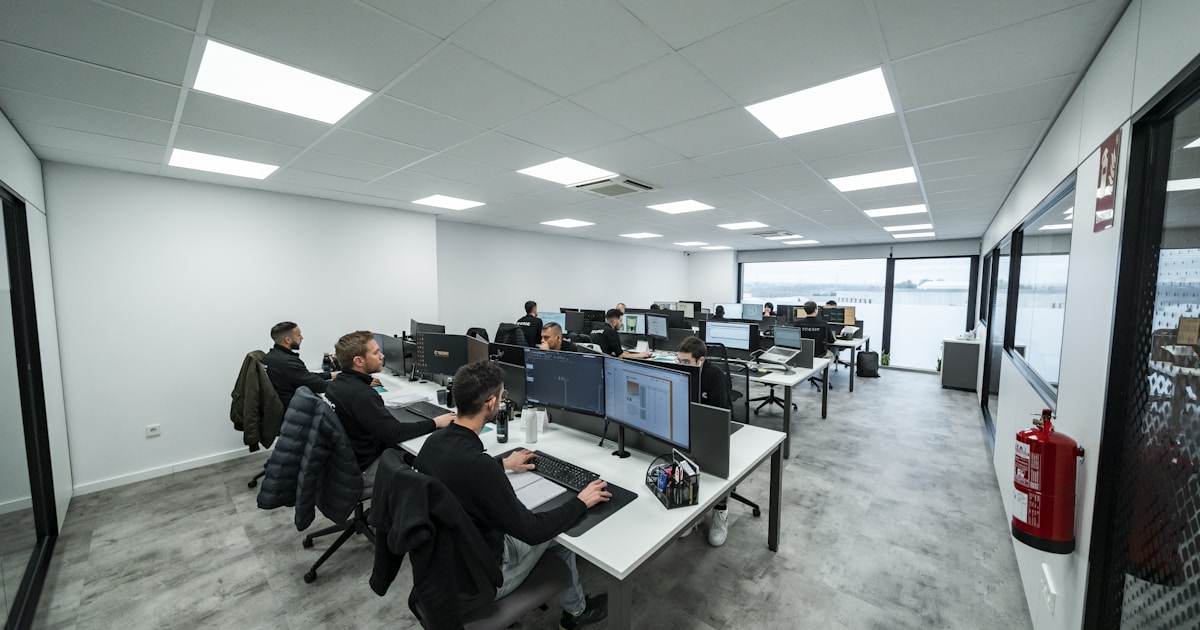
Before you can adapt, you need an honest picture of what is changing. AI is automating a growing share of tasks that have traditionally defined IT roles. Routine network monitoring, tier-1 help desk responses, scripted deployments, and manual log analysis are all increasingly handled by AI-powered tools. This does not mean those jobs are disappearing overnight — but it does mean the value placed on professionals who only perform these tasks is declining.
At the same time, AI is creating entirely new categories of work. Someone needs to build, train, fine-tune, and govern AI systems. Someone needs to secure them. Someone needs to evaluate their outputs, interpret their recommendations, and make decisions based on them. The total number of technology jobs is not shrinking — but the nature of those jobs is shifting decisively toward higher-order skills that AI cannot easily replicate.
The Skills That Will Define the Next Decade

If you want to future-proof your IT career, the following skills categories are where your investment will pay the highest dividends.
AI literacy and prompt engineering. You do not need to be a machine learning researcher to work effectively with AI. But you do need to understand how AI tools work at a conceptual level, how to evaluate their outputs critically, and how to direct them effectively. Prompt engineering — the art of crafting instructions that get AI systems to produce high-quality, accurate results — is rapidly becoming a core competency across IT roles.
Cloud architecture and platform engineering. AI workloads run on cloud infrastructure. Professionals who can design, build, and optimise cloud-native environments — particularly on AWS, Azure, and Google Cloud — will be in high demand as organisations scale their AI capabilities. Platform engineering, which focuses on building reliable internal developer platforms, is one of the fastest-growing specialisations in the field.
Cybersecurity. AI is expanding the attack surface. Deepfake-based social engineering, AI-generated phishing campaigns, and automated vulnerability exploitation are all growing threats. Security professionals who understand both traditional defences and AI-specific risks — such as model poisoning, adversarial inputs, and data privacy vulnerabilities — are among the most sought-after in the industry.
Data engineering and analytics. AI systems are only as good as the data they are trained on. Professionals who can build robust data pipelines, ensure data quality, and govern data assets will be essential partners to any organisation deploying AI at scale.
Human skills: communication, judgement, and leadership. As AI takes over more technical execution, the ability to translate complex technical concepts for non-technical stakeholders, make sound decisions under ambiguity, and lead teams through change becomes a genuine differentiator. These are skills that AI cannot replicate — and that organisations will pay a premium for.
Practical Steps to Start Upskilling Today

Knowing what skills matter is only the beginning. Here is a practical approach to building them.
- Audit your current role. Map out the tasks you perform regularly and honestly assess which of them could be automated or augmented by AI in the next three to five years. This gives you a clear picture of where you need to evolve.
- Get hands-on with AI tools. The fastest way to understand AI is to use it. Integrate GitHub Copilot into your development workflow, experiment with AI-driven monitoring tools in your infrastructure role, or use AI assistants to automate repetitive scripting tasks. Direct experience builds intuition that no course can replicate.
- Pursue targeted certifications. Cloud and AI certifications from AWS, Microsoft, and Google carry genuine market value. The AWS Certified Machine Learning Specialty, Microsoft Azure AI Engineer Associate, and Google Professional Machine Learning Engineer are excellent starting points depending on your background.
- Build projects and document them. Theory only takes you so far. Build small AI-integrated projects — even personal ones — and document them on GitHub or a personal portfolio. Tangible evidence of applied skills is what separates candidates in competitive job markets.
- Join communities and stay current. The AI landscape changes faster than any single course can cover. Communities like Stack Overflow, Reddit’s r/MachineLearning, and LinkedIn groups for your specialisation are invaluable for staying current with emerging tools and best practices.
Reframing Your Role: From Executor to Orchestrator

One of the most important mindset shifts for IT professionals navigating the AI era is moving from thinking of yourself as someone who executes tasks to someone who orchestrates systems — including AI systems. The most valuable IT professionals in the coming years will not be those who can write the most code or resolve the most tickets. They will be those who can design systems that leverage AI effectively, evaluate AI outputs with critical judgement, and apply human expertise where AI falls short.
This is not a diminishment of the IT profession. It is an elevation. The engineers who embraced cloud computing rather than defending on-premises infrastructure thrived. The developers who adopted agile rather than clinging to waterfall became more productive and more valued. The professionals who adapt to AI will follow the same trajectory.
Organisations Have a Role to Play Too
Career resilience in the AI era is not purely an individual responsibility. Forward-thinking organisations are investing in reskilling programmes, creating internal AI centres of excellence, and giving IT professionals dedicated time to learn and experiment with new tools. If your current employer is not investing in your development, that is worth factoring into your long-term career decisions.
When evaluating opportunities, look for organisations that treat AI as a tool to augment their teams rather than replace them, that are transparent about how they are using AI internally, and that have a track record of investing in employee growth.
Conclusion
The future of work with AI is not a threat to IT professionals — it is an invitation to grow. The professionals who will thrive are not those who know the most about how things used to be done. They are the ones who are curious enough to learn how things are being done now, and bold enough to position themselves at the frontier of what comes next.
Start with one skill. Take one course. Build one project. The journey of a thousand miles begins with a single step — and in this industry, that step taken today is worth far more than a perfect plan taken next year. Subscribe to the PetaFusion newsletter for weekly insights on AI, career development, and the technologies shaping the future of work.
Frequently Asked Questions
1. Will AI take over IT jobs?
AI will automate many routine IT tasks, but it is unlikely to eliminate IT jobs entirely. The nature of roles is shifting toward higher-order skills — architecture, security, AI governance, and human judgement — that AI cannot easily replicate.
2. What IT skills are most in demand in the AI era?
Cloud architecture, cybersecurity, data engineering, AI literacy, and platform engineering are among the highest-demand skills. Soft skills like communication, critical thinking, and leadership are also increasingly valued as AI handles more technical execution.
3. How can IT professionals learn AI skills?
The most effective approach combines hands-on experimentation with AI tools, targeted certifications (AWS, Microsoft, Google), and building real projects. Online platforms like Coursera, Pluralsight, and A Cloud Guru offer structured learning paths.
4. What is prompt engineering?
Prompt engineering is the practice of crafting effective instructions for AI systems to produce accurate, useful outputs. It is becoming a core skill across many IT roles as organisations integrate large language models and generative AI into their workflows.
5. Is cloud computing still worth learning in 2026?
Absolutely. Cloud infrastructure underpins virtually all enterprise AI deployments. AWS, Azure, and Google Cloud certifications remain among the most valuable credentials in the IT job market.
6. What certifications are best for IT professionals adapting to AI?
The AWS Certified Machine Learning Specialty, Microsoft Azure AI Engineer Associate, Google Professional Machine Learning Engineer, and CompTIA AI+ are strong options depending on your existing background and target role.
7. How do I know which of my IT tasks will be automated?
Tasks that are repetitive, rule-based, and high-volume are most vulnerable to automation. Tier-1 support, routine monitoring, scripted deployments, and manual log analysis are prime examples. Tasks requiring contextual judgement, stakeholder communication, and creative problem-solving are far more resilient.
8. What is platform engineering?
Platform engineering focuses on building and maintaining internal developer platforms that improve developer productivity and experience. It is one of the fastest-growing specialisations in IT, combining cloud infrastructure, DevOps, and tooling expertise.
9. Should I specialise or become a generalist in the AI era?
A T-shaped profile — broad foundational knowledge with deep expertise in one or two areas — tends to be the most resilient. Specialising in an area where AI adds high value (such as AI security or ML infrastructure) is particularly strategic.