Every 39 seconds, a cyberattack strikes somewhere in the world. As digital infrastructure expands and threat actors grow more sophisticated, traditional rule-based security tools are struggling to keep pace. Enter artificial intelligence — specifically machine learning — which is redefining how organisations detect, respond to, and prevent modern cyber threats. In this article, we explore how AI is transforming cybersecurity, what the technology actually does under the hood, and why it matters for businesses of every size.
The Evolving Cyber Threat Landscape

Cybercrime is no longer the domain of lone hackers in dark basements. Today’s threat actors operate as organised, well-funded criminal enterprises and state-sponsored groups capable of launching highly targeted attacks at scale. Ransomware-as-a-Service (RaaS) platforms allow even non-technical criminals to deploy sophisticated malware, while zero-day vulnerabilities are traded on dark web marketplaces for millions of dollars.
The volume and complexity of threats have outgrown what human security analysts can handle manually. Security operations centres (SOCs) are drowning in alerts — many tools generate hundreds of thousands of security events per day — and skilled cybersecurity professionals remain in short supply globally. This is precisely where artificial intelligence steps in to bridge the gap.
How Machine Learning Works in Cybersecurity

Machine learning is a subset of AI that enables systems to learn from data without being explicitly programmed with rigid rules. In cybersecurity, ML models are trained on vast datasets of known attack patterns, normal network behaviour, and historical incident records. Once trained, they can recognise subtle signals that deviate from the norm — signals that a human analyst might miss entirely.
There are three primary ML approaches used in security:
- Supervised learning — Models trained on labelled datasets of known threats and benign activity. Effective for classifying known malware families and phishing emails.
- Unsupervised learning — Models that detect anomalies in unlabelled data without prior examples. Ideal for identifying novel, never-before-seen attack patterns.
- Reinforcement learning — Models that improve through feedback loops, increasingly used in adaptive threat hunting and autonomous incident response.
AI-Powered Threat Detection in Real Time
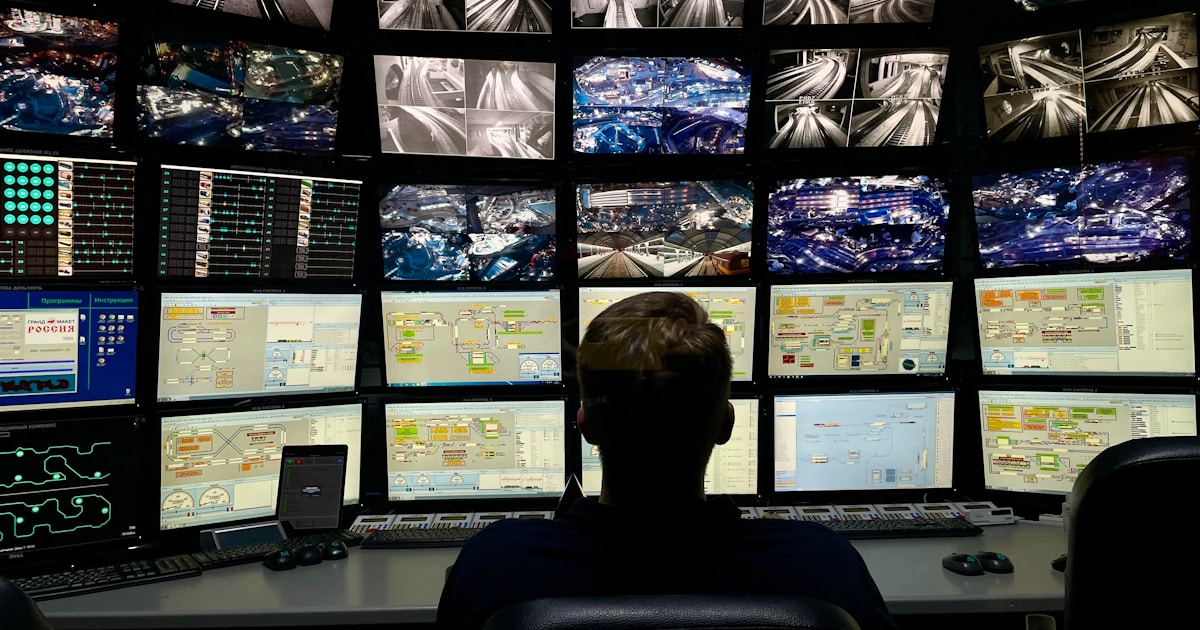
One of the most powerful applications of AI in cybersecurity is real-time threat detection. Traditional signature-based systems can only identify threats they’ve seen before — they’re fundamentally reactive. AI systems, by contrast, can proactively identify emerging threats by analysing behavioural patterns across network traffic, endpoints, and user activity simultaneously.
Modern AI-driven Security Information and Event Management (SIEM) platforms ingest millions of log entries per second and use ML models to correlate events across disparate data sources. What might take a human analyst hours to piece together — a low-and-slow data exfiltration campaign, for instance — can be flagged by an AI system within minutes or even seconds.
Tools like Microsoft Sentinel, CrowdStrike Falcon, and Darktrace use AI to assign risk scores to events in real time, allowing security teams to focus on the alerts that truly matter rather than wading through thousands of false positives.
Behavioural Analytics and Anomaly Detection

User and Entity Behaviour Analytics (UEBA) is one of the most effective AI-driven security capabilities available today. Rather than relying on known attack signatures, UEBA builds a baseline profile of normal behaviour for every user, device, and application on the network. When activity deviates from that baseline — a finance employee suddenly downloading 10GB of files at 2am, or a server communicating with an unknown external IP — the system raises an alert.
This approach is particularly powerful for detecting insider threats, compromised credentials, and advanced persistent threats (APTs) that deliberately avoid triggering signature-based rules. Because the AI continuously updates its behavioural models, it adapts to the natural evolution of user behaviour over time, reducing false positives without human intervention.
AI in Malware Detection and Prevention
Traditional antivirus software relies on signature databases — essentially lists of known bad files. Cybercriminals have long known how to evade these systems by slightly modifying malware code to produce a different hash value. AI changes the equation entirely.
Modern AI-powered endpoint detection and response (EDR) tools analyse the structural characteristics and runtime behaviour of files rather than relying on static signatures. An ML model can examine thousands of attributes of a suspicious file — its code structure, the system calls it makes, the network connections it attempts — and determine with high confidence whether it’s malicious, even if that specific variant has never been seen before.
This capability, often called next-generation antivirus (NGAV), has proven highly effective against polymorphic malware, fileless attacks, and zero-day exploits. Companies like SentinelOne, Cylance, and Carbon Black have built their entire product offerings around this AI-first approach to malware prevention.
Challenges and Limitations of AI in Cybersecurity
AI is not a silver bullet. There are important limitations and risks that security leaders must understand.
- Adversarial AI: Just as defenders use AI, attackers are increasingly using it too. Adversarial machine learning techniques can be used to craft inputs that deliberately fool AI models, causing them to misclassify malware as benign.
- Data quality: ML models are only as good as the data they are trained on. Biased, incomplete, or outdated training data can lead to poor detection rates and high false positive volumes.
- Explainability: Many deep learning models operate as “black boxes” — they produce outputs without clear explanations, making it difficult for analysts to understand why a particular alert was raised or to satisfy regulatory requirements around decision-making transparency.
- Cost and complexity: Deploying and maintaining AI-driven security tools requires significant investment in both technology and skilled personnel who understand how to interpret and act on AI outputs.
The Future of AI-Driven Cybersecurity
Looking ahead, AI will only become more deeply embedded in every layer of the cybersecurity stack. Key trends to watch include autonomous SOCs, where AI agents handle tier-1 alert triage and incident response with minimal human intervention; AI-powered deception technologies that create dynamic honeypots to trap and study attackers; and the integration of large language models (LLMs) into threat intelligence platforms, enabling security teams to query vast datasets using plain-language prompts.
Governments and regulators are also beginning to take notice. The EU’s AI Act and NIST’s AI Risk Management Framework both include provisions relevant to AI use in security-critical systems, signalling that governance frameworks are catching up with the technology.
Conclusion
AI and machine learning have moved from buzzwords to operational necessities in modern cybersecurity. They give defenders the speed, scale, and pattern-recognition capability needed to compete with today’s highly sophisticated threat actors. But technology alone is never enough — AI works best when it augments skilled human analysts who can apply judgement, context, and creativity to the most complex threats.
If your organisation hasn’t yet evaluated AI-driven security tools, now is the time. The question is no longer whether AI belongs in your security stack — it’s how quickly you can deploy it. Subscribe to the PetaFusion newsletter for weekly insights on AI, cybersecurity, and the technologies shaping the future of business.
Frequently Asked Questions
1. What is AI in cybersecurity?
AI in cybersecurity refers to the use of machine learning, deep learning, and other AI techniques to detect, prevent, and respond to cyber threats faster and more accurately than traditional rule-based systems.
2. How does machine learning detect cyber threats?
Machine learning models are trained on large datasets of normal and malicious activity. They learn to identify patterns and anomalies that indicate a threat, even if the specific attack variant has never been seen before.
3. Can AI prevent all cyberattacks?
No. AI significantly improves detection rates and response times, but no technology can prevent 100% of attacks. A layered security strategy combining AI tools with human expertise remains the best approach.
4. What is UEBA?
User and Entity Behaviour Analytics (UEBA) is an AI-driven approach that builds baseline profiles of normal user and device behaviour, then flags deviations that may indicate a threat such as insider attacks or compromised accounts.
5. How is AI used in malware detection?
AI-powered endpoint tools analyse file structures, code behaviour, and runtime characteristics to identify malware without relying on signature databases, making them effective against new and unknown threats.
6. What are the risks of using AI in cybersecurity?
Key risks include adversarial attacks that fool AI models, reliance on poor-quality training data, lack of explainability in complex models, and the growing use of AI by threat actors themselves.
7. What is adversarial machine learning?
Adversarial machine learning involves crafting inputs specifically designed to deceive AI models. In cybersecurity, attackers may use this technique to make malicious files appear benign to AI-based detection systems.
8. Which companies offer AI-powered cybersecurity tools?
Leading providers include CrowdStrike, Darktrace, Microsoft (Sentinel), SentinelOne, Palo Alto Networks (Cortex XDR), and IBM (QRadar). Each uses ML across threat detection, SIEM, and endpoint protection.
9. Is AI cybersecurity suitable for small businesses?
Yes. Many AI security solutions are offered as cloud-based services with scalable pricing, making them accessible to small and medium-sized businesses that cannot afford large in-house security teams.
10. What is the future of AI in cybersecurity?
The future includes autonomous SOC operations, AI-powered threat hunting, LLM-based security assistants, and tighter integration between AI and zero-trust architectures. Regulatory frameworks are also evolving to govern AI use in security-critical environments.




![person walking along corridors ]](https://petafusion.com/wp-content/uploads/2026/04/worsfold_324nknuhxDg_1920x1080-768x432.jpg)