Software development has always been a discipline that rewards those who work smarter, not just harder. Today, artificial intelligence is taking that idea to an entirely new level. From writing boilerplate code in milliseconds to autonomously detecting bugs before they reach production, AI is reshaping every stage of the software development lifecycle. In this article, we explore how AI is transforming the way developers build, test, and ship software — and what it means for the future of the profession.
AI-Powered Code Generation and Autocompletion
The most visible manifestation of AI in software development is intelligent code generation. Tools like GitHub Copilot, Amazon CodeWhisperer, and Google Gemini Code Assist act as an always-on pair programmer, suggesting entire functions, classes, and algorithms in real time as a developer types. These tools are trained on billions of lines of open-source code and can translate natural-language comments into working implementations with remarkable accuracy.
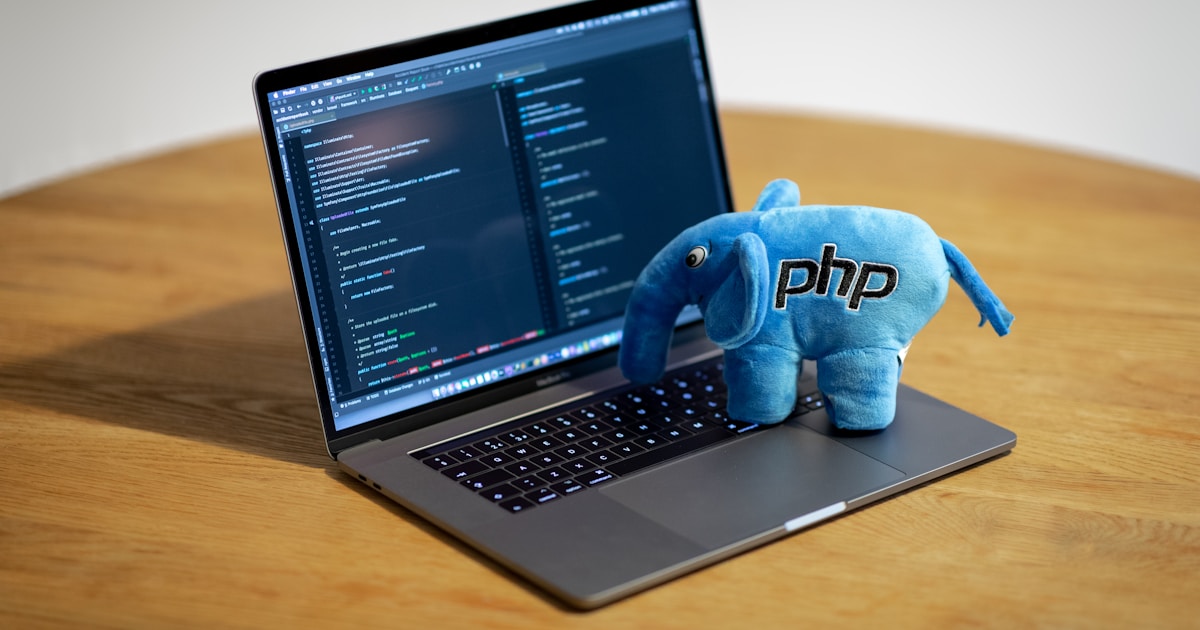
The productivity gains are significant. Studies by GitHub found that developers using Copilot completed tasks up to 55% faster than those who did not. More importantly, these tools free developers from the cognitive load of remembering syntax, boilerplate patterns, and API signatures — allowing them to focus on higher-order problem solving, architecture, and creative thinking.
Code generation is not limited to simple snippets. Modern AI coding assistants can scaffold entire project structures, generate unit test suites from function signatures, and suggest optimised algorithms for common data structures. The gap between an idea and working code has never been narrower.
Automated Testing and Quality Assurance
Writing tests is one of the most time-consuming — and most frequently skipped — parts of software development. AI is making test generation dramatically faster and more comprehensive. Tools like Diffblue Cover and CodiumAI analyse existing code and automatically generate meaningful unit tests, edge case scenarios, and regression suites that would take human testers hours to write manually.
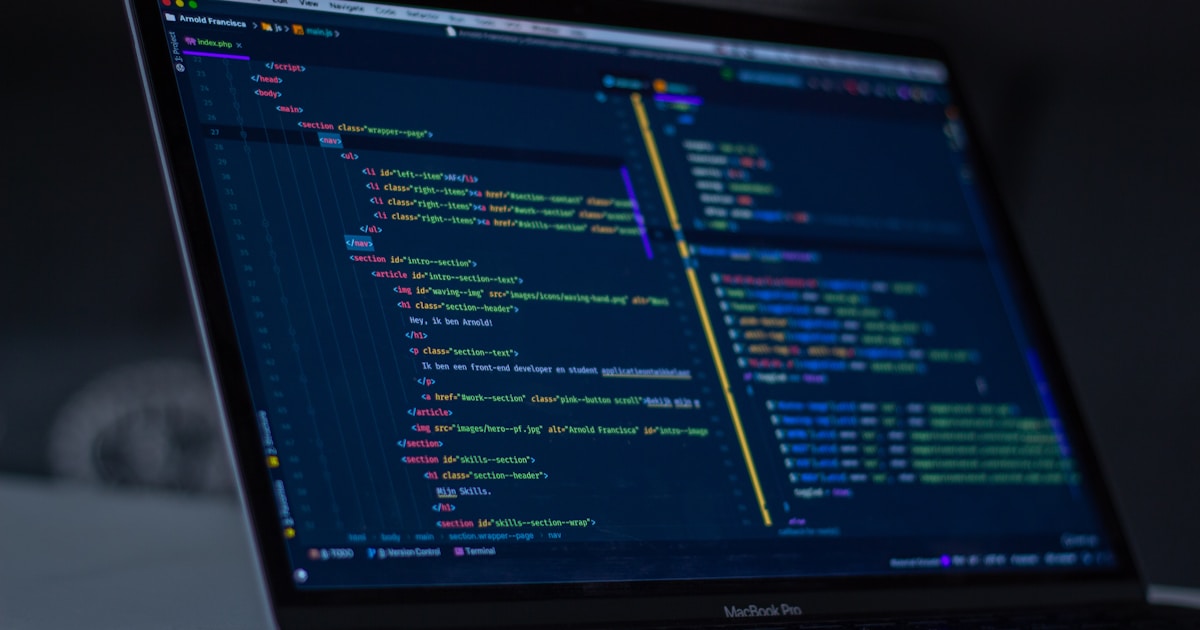
Beyond unit tests, AI-driven test platforms use machine learning to intelligently prioritise which tests to run first based on recent code changes, reducing CI pipeline times without sacrificing coverage. Visual AI testing tools like Applitools use image recognition to detect unintended UI changes across browsers and screen sizes — a task that is virtually impossible to perform manually at scale.
The result is higher code quality with less effort. Teams that adopt AI-assisted testing typically see a significant reduction in the number of bugs that reach production, and faster feedback loops that make fixing issues cheaper and less disruptive.
AI in DevOps and CI/CD Pipelines
AI is becoming deeply embedded in DevOps workflows, bringing intelligence to the processes that build, deploy, and monitor software in production. AIOps platforms like Dynatrace and New Relic use machine learning to monitor thousands of application metrics simultaneously, automatically detecting anomalies, predicting failures before they occur, and correlating root causes across complex distributed systems.
In CI/CD pipelines, AI can analyse historical build and deployment data to predict which code changes are likely to cause failures, allowing teams to catch risky deployments before they go live. AI-powered deployment tools can also make intelligent decisions about when to roll back a release based on real-time error rates and performance degradation signals — all without human intervention.
Infrastructure as code is another area where AI is making a mark. Tools powered by large language models can generate Terraform, Kubernetes, and Docker configurations from plain-language descriptions, dramatically lowering the barrier to cloud-native development for teams without deep infrastructure expertise.
Bug Detection and Intelligent Code Review
Finding bugs early is one of the highest-value activities in software development — a defect caught in development costs a fraction of what it costs to fix in production. AI-powered static analysis tools like DeepCode (now Snyk Code) and Amazon CodeGuru go far beyond traditional linters. They use machine learning models trained on millions of real-world bug patterns to identify security vulnerabilities, performance bottlenecks, and logical errors that rule-based tools routinely miss.
AI is also transforming code review. Rather than waiting days for a human reviewer to provide feedback, AI review assistants can analyse a pull request within seconds, flagging potential issues, suggesting improvements, and even explaining the reasoning behind each suggestion. This accelerates the review cycle and ensures a consistent standard of quality regardless of reviewer availability or experience level.
Critically, these tools learn from the codebase they are applied to, becoming more accurate and context-aware over time. An AI reviewer trained on your organisation’s specific code standards and patterns will catch issues that a generic tool would overlook.
Natural Language to Code: The Next Frontier
Perhaps the most transformative development is the emergence of natural language interfaces for software creation. Platforms like Cursor, Replit Agent, and Devin (from Cognition Labs) allow developers — and increasingly, non-developers — to describe what they want in plain English and receive working, runnable code in return. This is moving beyond simple autocomplete into genuine agentic programming, where the AI can plan, write, debug, and iterate on a solution autonomously.
Low-code and no-code platforms powered by AI are also bringing software creation within reach of domain experts who have never written a line of code. A marketing analyst can now describe a data pipeline in plain language and have it generated automatically. A product manager can prototype an application feature without engineering support. The democratisation of software development is accelerating rapidly.
This does not mean developers are becoming obsolete. Rather, the role is evolving. The most valuable developers will be those who can effectively direct and evaluate AI-generated code, think architecturally, understand system design trade-offs, and apply human judgement to the problems that AI still struggles with — ambiguity, novel requirements, and ethical considerations.
Challenges and Considerations for AI-Assisted Development
The benefits of AI in software development are real, but so are the risks. Several important challenges must be managed carefully.
- Code quality and hallucinations: AI code generators can produce plausible-looking but incorrect or insecure code, particularly for niche libraries or complex algorithmic problems. Developers must critically evaluate AI suggestions rather than blindly accepting them.
- Security vulnerabilities: Research has shown that AI-generated code can inadvertently reproduce insecure patterns from training data. Security scanning of AI-generated code is not optional — it is essential.
- Intellectual property concerns: The legality of training AI models on open-source code and the licensing implications of AI-generated outputs remain active areas of legal debate. Organisations should understand their exposure before adopting AI coding tools at scale.
- Over-reliance and skill atrophy: Heavy reliance on AI for routine coding tasks could erode foundational skills in junior developers if not managed with intentional learning practices.
Conclusion
AI is not replacing software developers — it is redefining what developers spend their time on. The mechanical, repetitive, and error-prone parts of development are increasingly handled by AI, freeing human engineers to focus on creative problem-solving, system thinking, and delivering genuine user value. Teams that embrace AI coding tools thoughtfully — with proper security practices and critical evaluation — will ship better software, faster, with smaller teams.
The question for every engineering organisation today is not whether to adopt AI development tools, but how to do so in a way that maximises the benefits while managing the risks. Subscribe to the PetaFusion newsletter for weekly insights on AI, software development, and the technologies transforming the way we build the future.
Frequently Asked Questions
1. How is AI used in software development?
AI is used across the software development lifecycle — from code generation and autocompletion to automated testing, intelligent code review, DevOps automation, and bug detection. Tools like GitHub Copilot, Snyk Code, and Dynatrace are widely used examples.
2. Can AI write code on its own?
Yes, to a significant degree. Modern AI tools can generate complete functions, classes, and even full application scaffolds from natural language descriptions. However, human oversight remains essential to ensure correctness, security, and alignment with requirements.
3. Will AI replace software developers?
AI is unlikely to replace software developers in the near term. It automates repetitive tasks and accelerates routine work, but complex system design, creative problem-solving, and ethical decision-making still require human expertise. The role is evolving, not disappearing.
4. What is GitHub Copilot?
GitHub Copilot is an AI-powered code assistant developed by GitHub and OpenAI. It integrates into popular IDEs and suggests code completions, functions, and documentation in real time as you type, trained on a vast corpus of public code repositories.
5. How does AI improve software testing?
AI automates test generation, intelligently prioritises test execution based on recent changes, detects visual UI regressions, and identifies edge cases that human testers might overlook. This increases test coverage while reducing the time and effort required.
6. What is AIOps?
AIOps (Artificial Intelligence for IT Operations) uses machine learning to monitor, analyse, and automate IT infrastructure and application operations. It helps detect anomalies, predict failures, and correlate root causes across complex distributed systems in real time.
7. Is AI-generated code secure?
Not always. AI models can reproduce insecure coding patterns from their training data. It is essential to run AI-generated code through security scanning tools and have it reviewed by experienced developers before deploying to production.
8. What are the best AI tools for developers in 2026?
Leading AI development tools include GitHub Copilot, Amazon CodeWhisperer, Google Gemini Code Assist, Cursor, Replit Agent, Snyk Code, CodiumAI, and Dynatrace. The best choice depends on your language, workflow, and security requirements.
9. What is natural language to code?
Natural language to code refers to AI systems that can generate working code from plain English descriptions. Tools like Cursor and Replit Agent allow developers — and non-developers — to describe what they want in plain language and receive runnable code in return.
10. How can developers prepare for AI in software development?
Developers should learn to effectively prompt and evaluate AI tools, strengthen system design and architectural skills, stay current with AI-assisted workflows, and develop a critical eye for AI-generated output. Understanding security implications of AI code is also increasingly important.