Something genuinely new is happening in artificial intelligence. For years, AI has been a tool — something you invoke, prompt, and receive an answer from. But a new generation of AI systems is beginning to act rather than just respond. These are autonomous AI agents: systems that can set their own sub-goals, take sequences of actions, use external tools, and pursue complex objectives across extended time horizons with minimal human supervision. They represent a fundamental shift in what AI can do — and what organisations and individuals need to understand about the technology shaping their world.
What Are Autonomous AI Agents?
An autonomous AI agent is an AI system that can perceive its environment, make decisions, execute actions, and pursue goals over multiple steps without requiring a human to direct each individual action. Where a conventional AI responds to a single prompt with a single output, an agent plans, acts, observes the results of those actions, and then plans and acts again — iterating until a goal is achieved or it determines it cannot proceed.
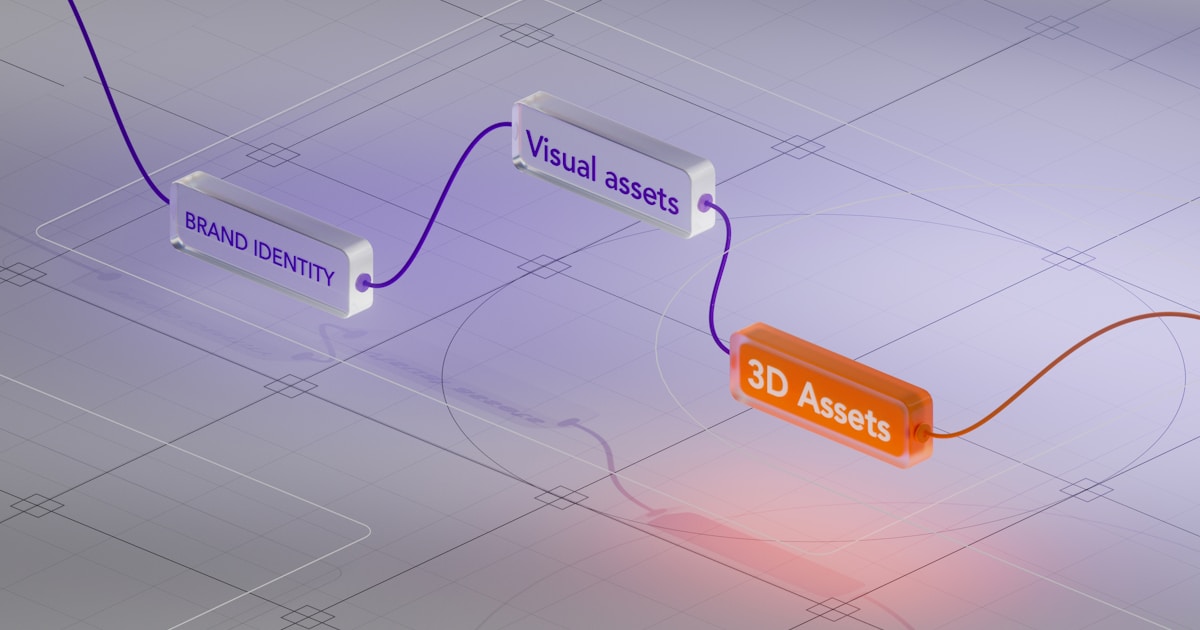
The architecture of most current AI agents combines a large language model (LLM) as the reasoning core with a set of tools the agent can invoke — web search, code execution, file management, API calls, database queries, and more. The LLM decides what to do next, calls a tool, receives the output, and uses that output to inform its next decision. This loop continues until the task is complete.
Think of the difference between asking a colleague a question and asking them to handle a project. A single-turn AI answers the question. An agent handles the project — breaking it down, gathering information, making decisions along the way, and delivering a result.
How AI Agents Work: The Core Architecture
Understanding AI agents requires familiarity with a few key concepts that define how they operate.

Planning and reasoning. Agents use techniques like chain-of-thought reasoning and tree-of-thought exploration to break complex goals into manageable sub-tasks and plan sequences of actions. Frameworks like ReAct (Reasoning and Acting) interleave reasoning steps with action steps, allowing the agent to think through what to do, do it, observe the result, and reason about what to do next.
Memory. Agents can maintain context across a session (short-term memory), retrieve relevant information from external stores like vector databases (long-term memory), and store facts or intermediate results for later use (working memory). This allows them to operate on tasks that span far more information than fits in a single context window.
Tool use. The ability to call external tools is what gives agents their power. A research agent can search the web, read documents, execute code to analyse data, and draft a report — all as part of a single autonomous workflow. Tools are the hands of the agent’s mind.
Multi-agent collaboration. Increasingly, complex tasks are handled not by a single agent but by a network of specialised agents that collaborate. An orchestrator agent breaks down a task and delegates sub-tasks to specialist agents — a research agent, a writing agent, a code agent — and synthesises their outputs into a final result. This mirrors how human organisations work.
Real-World Applications Emerging Today
AI agents are moving rapidly from research prototypes into production deployments across industries. The applications are as varied as the tasks humans perform.

Software development. Coding agents like Devin, GitHub Copilot Workspace, and Cursor’s agent mode can autonomously plan, write, debug, and test software across entire codebases. They can accept a feature request in plain English and return a working pull request, handling every intermediate step independently.
Business process automation. Agents are being deployed to handle complex multi-step business workflows — processing invoices, responding to customer enquiries, conducting research, and generating reports — tasks that previously required human judgement at each step and could not be handled by traditional rule-based automation.
Research and knowledge work. Research agents can autonomously search academic literature, synthesise findings across dozens of papers, identify gaps in existing research, and produce structured summaries — compressing weeks of human research time into hours.
Personal productivity. Consumer-facing agent products like Claude’s Projects and OpenAI’s Operator are beginning to handle tasks like booking travel, managing calendars, filing expense reports, and drafting communications on behalf of users, drawing on real-world data and acting through web interfaces.
Why Autonomous AI Agents Matter for Organisations
The strategic significance of AI agents for organisations is difficult to overstate. Traditional automation handles repetitive, rule-based tasks. AI agents can handle tasks that require judgement, adaptation, and multi-step reasoning — the category of work that has historically resisted automation entirely.

For knowledge-intensive industries — consulting, law, finance, research, software development — a large proportion of the value created is in precisely this kind of complex, judgement-intensive work. If even a fraction of this work can be augmented or automated by AI agents, the productivity implications are enormous.
Early adopters are already seeing significant results. Companies deploying coding agents report dramatic reductions in time-to-feature for software development. Organisations using research agents are compressing competitive intelligence cycles from weeks to hours. The gap between companies that effectively deploy AI agents and those that do not is likely to widen significantly over the next three to five years.
The Risks: What to Watch Closely
Autonomous agents also introduce risks that are qualitatively different from those associated with simpler AI tools, and these deserve serious attention.

- Unpredictable behaviour: Agents that take sequences of actions in the real world can produce unintended consequences that are difficult to reverse. An agent with access to email and calendar systems could send messages or make commitments that are hard to undo.
- Security vulnerabilities: Agents that browse the web and process external content are vulnerable to prompt injection attacks — malicious instructions embedded in web pages or documents designed to hijack the agent’s behaviour.
- Amplified errors: In a multi-step autonomous workflow, an early error can propagate and compound through subsequent steps, producing final outputs that are significantly wrong despite each individual step appearing reasonable.
- Accountability gaps: When an agent makes a consequential decision as part of a long autonomous chain, it can be difficult to identify exactly where and why things went wrong, and who bears responsibility for the outcome.
Responsible deployment of AI agents requires clear boundaries on what actions agents are permitted to take, robust human oversight at appropriate checkpoints, and careful logging of agent actions to enable auditability and correction.
Conclusion
Autonomous AI agents represent one of the most significant developments in the short history of artificial intelligence. They are moving AI from a tool you use to a collaborator that works alongside — and increasingly, on behalf of — human professionals. The organisations and individuals who understand this shift, invest in learning how to work effectively with agents, and deploy them with appropriate governance will be well-positioned for the era ahead.
We are still in the early chapters of the agent era. The systems available today are impressive but imperfect. The systems available in three to five years will be substantially more capable. The time to develop understanding and build internal capability is now. Subscribe to the PetaFusion newsletter for weekly insights on AI agents, automation, and the technologies transforming how work gets done.
Frequently Asked Questions
1. What is an autonomous AI agent?
An autonomous AI agent is an AI system that can plan, take sequences of actions using external tools, and pursue complex goals over multiple steps without requiring human direction at each stage. It perceives its environment, reasons about what to do, acts, and iterates.
2. How are AI agents different from chatbots?
Chatbots respond to individual queries with single outputs. AI agents pursue multi-step goals autonomously, using tools like web search, code execution, and API calls to gather information, take actions, and deliver results across extended workflows.
3. What tools can AI agents use?
AI agents can be equipped with a wide range of tools including web search, code execution, file reading and writing, database queries, API calls, email and calendar access, and browser automation. The specific tools available determine what tasks an agent can perform.
4. What is prompt injection in AI agents?
Prompt injection is a security attack where malicious instructions are embedded in external content (such as a web page or document) that an agent processes. If successful, these instructions can hijack the agent’s behaviour, causing it to take unintended or harmful actions.
5. What is a multi-agent system?
A multi-agent system involves multiple AI agents collaborating to accomplish a complex task. An orchestrator agent typically breaks down the task and delegates sub-tasks to specialist agents, then synthesises their outputs. This mirrors how human teams with different specialisations work together.
6. What are the best AI agent frameworks available?
Leading AI agent frameworks include LangChain, LlamaIndex, Microsoft AutoGen, CrewAI, and Anthropic’s Claude Agent SDK. Each offers different approaches to agent architecture, tool use, and multi-agent coordination.
7. Are autonomous AI agents safe to deploy in production?
With appropriate safeguards, yes. Best practices include clearly defining the scope of actions an agent is permitted to take, maintaining human oversight at critical decision points, logging all agent actions for auditability, and starting with low-stakes deployments before expanding to higher-stakes use cases.
8. What industries are most affected by AI agents?
Knowledge-intensive industries — software development, consulting, law, finance, research, and marketing — are most immediately affected, as AI agents can automate the complex, multi-step reasoning tasks that define much of the value created in these sectors.
9. What is the difference between AI agents and robotic process automation (RPA)?
RPA automates rule-based, repetitive tasks by following fixed scripts. AI agents can handle tasks that require judgement, reasoning, and adaptation to unexpected situations — the class of work that has historically been too complex for RPA to handle.
10. How can organisations start deploying AI agents?
Start by identifying high-value, well-defined tasks with clear success criteria and limited downside risk. Pilot with a small team, instrument the agent’s actions carefully, and build internal expertise before scaling. Frameworks like LangChain or AutoGen can accelerate development for technical teams.