Blockchain in banking is no longer a futuristic concept — it’s a present reality reshaping how financial institutions operate, settle transactions, and serve their customers. From decentralized ledgers that eliminate intermediaries to smart contracts that automate compliance, blockchain finance use cases are proliferating at an unprecedented pace. As we move deeper into 2026, the fintech blockchain revolution is fundamentally rewriting the rules of money, trust, and transparency.
In this comprehensive guide, we’ll explore exactly how blockchain is disrupting traditional banking, examine real-world implementations by major financial institutions, and uncover the opportunities and challenges that lie ahead.
Understanding Blockchain in the Context of Banking

At its core, a blockchain is a distributed, immutable ledger that records transactions across a network of computers. Unlike traditional centralized databases maintained by a single institution, blockchain distributes data across thousands of nodes, ensuring that no single entity controls the information.
Why Banks Are Paying Attention
Traditional banking infrastructure was built decades ago. Legacy systems are often siloed, slow, and expensive to maintain. Blockchain offers a paradigm shift:
- Immutability — Once a transaction is recorded, it cannot be altered or deleted, creating an unassailable audit trail.
- Transparency — All participants on the network can view the same version of the truth in real time.
- Decentralization — Removing intermediaries reduces costs and settlement times from days to seconds.
- Programmability — Smart contracts enable automated, conditional execution of financial agreements.
According to a Juniper Research study, blockchain deployments in the banking sector are projected to save institutions over $27 billion annually by 2030 through reduced infrastructure and transaction costs.
Key Areas Where Blockchain Is Disrupting Banking

1. Cross-Border Payments & Remittances
International wire transfers have long been plagued by high fees, slow processing times (3-5 business days), and opaque exchange rates. Blockchain-based payment networks are changing that reality dramatically.
Ripple (XRP Ledger) provides real-time gross settlement across borders in 3-5 seconds, compared to SWIFT’s multi-day process. Major banks including Santander, SBI Holdings, and Standard Chartered have integrated Ripple’s technology into their cross-border operations.
JPMorgan’s Kinexys (formerly Onyx) processes over $2 billion in daily transactions, enabling institutional clients to transfer value across borders using blockchain rails.
2. Trade Finance
Trade finance — the backbone of global commerce — has long been encumbered by paper-based processes, manual verification, and fragmented systems. Blockchain is streamlining the entire lifecycle:
- Letters of Credit — HSBC and ING completed the world’s first blockchain-based letter of credit transaction using the Voltron platform, reducing processing time from 5-10 days to under 24 hours.
- Supply Chain Finance — Platforms like Marco Polo and Contour connect buyers, sellers, and banks on a shared ledger, eliminating document duplication and fraud.
- Invoice Factoring — Blockchain ensures that invoices can’t be double-financed, a problem that costs the industry billions annually.
3. Know Your Customer (KYC) & Identity Verification
Banks collectively spend over $500 million annually on KYC compliance. The current process requires each institution to independently verify customer identities — a redundant and expensive exercise.
Blockchain-based digital identity solutions allow customers to verify their identity once and share cryptographic proof with any bank or financial service provider:
- Self-Sovereign Identity (SSI) — Users control their own identity data and grant access to banks as needed.
- Shared KYC Utilities — Consortiums like R3 Corda-based KYC solutions let multiple banks access verified identity data, reducing onboarding time from weeks to minutes.
4. Securities Settlement & Clearing
Stock and bond settlements currently operate on a T+1 or T+2 cycle (trade date plus one or two business days). Blockchain enables near-instantaneous settlement:
- ASX (Australian Securities Exchange) has been piloting blockchain-based clearing and settlement systems to replace its legacy CHESS platform.
- DTCC (Depository Trust & Clearing Corporation) — The world’s largest securities settlement organization is actively exploring distributed ledger technology for post-trade processing.
- Tokenized Securities — Companies like Securitize and Polymath enable traditional assets (stocks, bonds, real estate) to be represented as digital tokens on a blockchain, enabling 24/7 trading and fractional ownership.
Smart Contracts: The Automation Engine of Financial Services
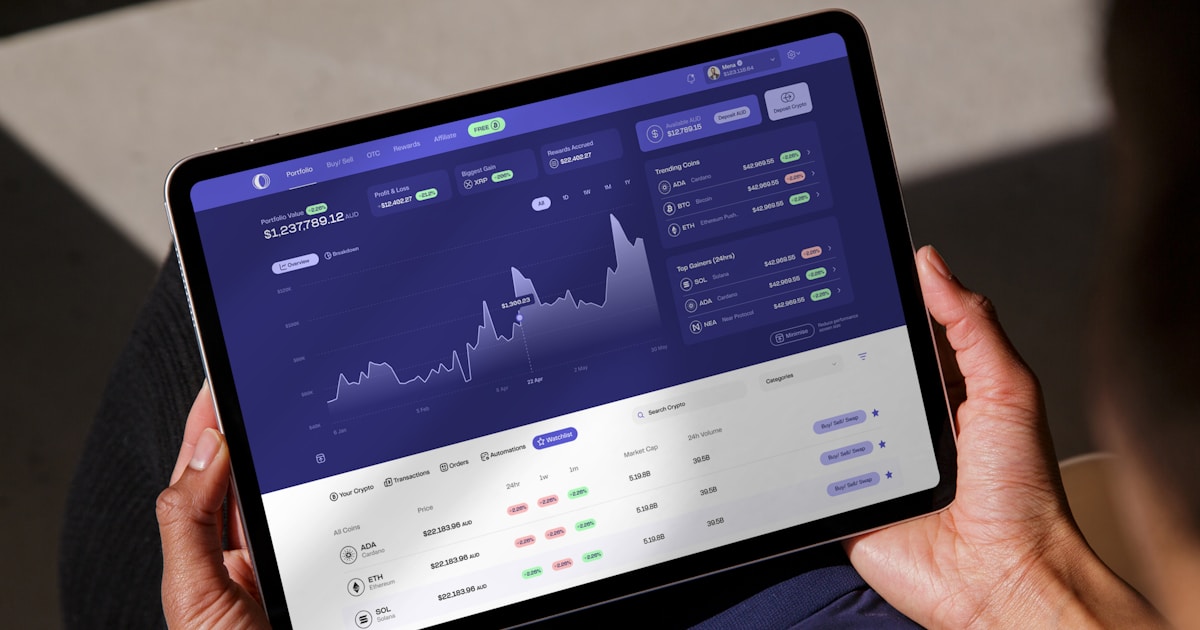
Smart contracts are self-executing programs stored on a blockchain that automatically enforce the terms of an agreement when predefined conditions are met. In banking, they’re transforming:
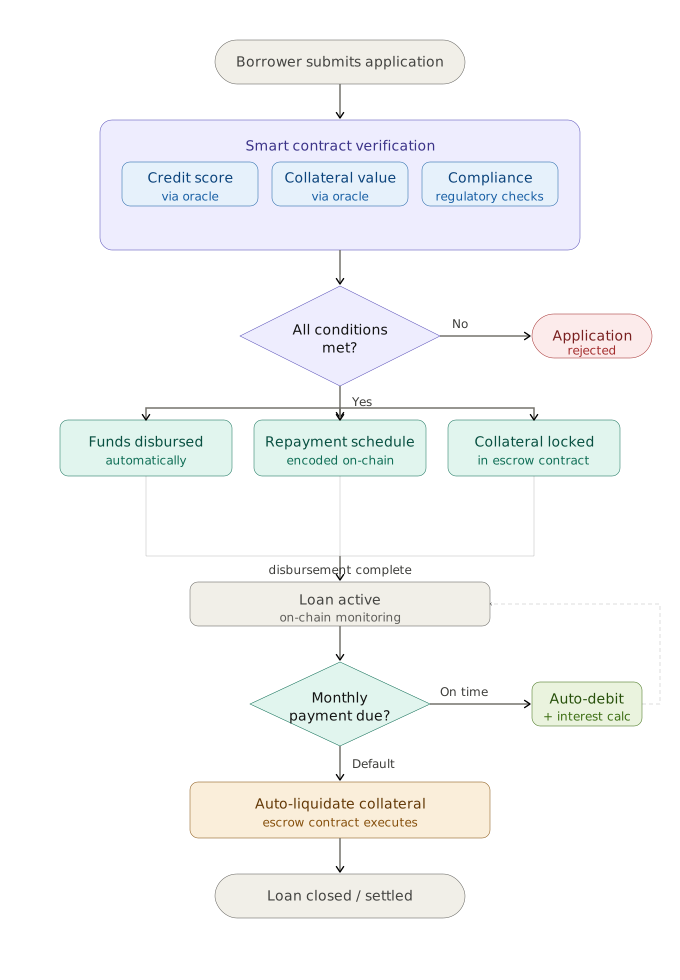
- Loan Origination — Automated credit scoring, collateral verification, and disbursement without human intermediaries.
- Insurance Claims — Parametric insurance products that automatically trigger payouts when conditions (e.g., flight delays, weather events) are verified by oracles.
- Syndicated Lending — Smart contracts coordinate complex multi-party loan agreements, ensuring all participants see the same terms and payments flow automatically.
- Regulatory Compliance — Programmable compliance rules can be embedded directly into financial products, ensuring real-time adherence to regulations.
How a Smart Contract Works in Lending
Central Bank Digital Currencies (CBDCs): The Institutional Embrace
Perhaps the strongest validation of blockchain in banking comes from central banks themselves. Over 130 countries — representing 98% of global GDP — are actively exploring or piloting Central Bank Digital Currencies (CBDCs).
Notable CBDC Projects
| Country/Region | CBDC Name | Status (2026) | Technology |
|---|---|---|---|
| China | Digital Yuan (e-CNY) | Widespread rollout | Permissioned DLT |
| European Union | Digital Euro | Advanced pilot | DLT-based |
| India | Digital Rupee (e₹) | Retail pilot | DLT-based |
| United Kingdom | Digital Pound | Design phase | Under evaluation |
| United States | FedNow / Digital Dollar | Research phase | Under evaluation |
| Nigeria | eNaira | Live | Hyperledger Fabric |
| Bahamas | Sand Dollar | Live | Permissioned DLT |
CBDCs combine the efficiency of digital payments with the stability and trust of central bank-backed money. They represent a bridge between traditional finance and the blockchain-native future.
DeFi Meets TradFi: The Convergence
Decentralized Finance (DeFi) protocols — which operate entirely on public blockchains without intermediaries — are increasingly converging with traditional finance (TradFi). This convergence is creating hybrid models:
- Aave Arc — A permissioned version of the Aave lending protocol designed specifically for institutional participants who require KYC compliance.
- JPMorgan’s Project Guardian — In collaboration with the Monetary Authority of Singapore, JPMorgan successfully tested DeFi-style lending using tokenized deposits.
- BlackRock’s BUIDL Fund — The world’s largest asset manager launched a tokenized money market fund on the Ethereum blockchain, signaling Wall Street’s growing comfort with on-chain finance.
The Tokenization Opportunity
Boston Consulting Group and ADDX estimate that the tokenization of global illiquid assets could reach $16 trillion by 2030 — representing 10% of global GDP. This includes:
- Real estate
- Private equity
- Bonds and fixed income
- Commodities
- Art and collectibles
Benefits of Blockchain Adoption in Banking
| Benefit | Traditional System | Blockchain-Enabled |
|---|---|---|
| Settlement Speed | T+1 to T+3 days | Near-instant (seconds to minutes) |
| Transaction Costs | High (intermediaries, fees) | Significantly reduced |
| Transparency | Opaque, fragmented | Real-time shared ledger |
| Fraud Prevention | Post-facto detection | Immutable records, real-time monitoring |
| Operational Hours | Business hours only | 24/7/365 |
| Data Reconciliation | Manual, error-prone | Automated, single source of truth |
Challenges & Barriers to Adoption
Despite the promise, blockchain adoption in banking faces several significant hurdles:
1. Regulatory Uncertainty
Financial regulations vary dramatically across jurisdictions. The lack of harmonized global standards for blockchain-based financial products creates compliance complexity. However, frameworks like the EU’s Markets in Crypto-Assets (MiCA) regulation are beginning to provide clarity.
2. Scalability Concerns
Public blockchains like Ethereum have historically struggled with throughput. While Layer 2 solutions (e.g., Polygon, Optimism, Arbitrum) and Ethereum’s ongoing upgrades are addressing this, enterprise-grade performance remains a focus area.
3. Interoperability
The blockchain ecosystem is fragmented across hundreds of networks. Cross-chain protocols and standards (like Chainlink’s CCIP — Cross-Chain Interoperability Protocol) are emerging, but seamless multi-chain banking is still evolving.
4. Legacy System Integration
Banks can’t simply rip and replace their existing infrastructure. Hybrid architectures that bridge legacy core banking systems with blockchain layers require significant investment and careful migration strategies.
5. Energy & Sustainability
While Proof-of-Stake blockchains (like Ethereum post-Merge) have reduced energy consumption by ~99.95%, some networks still rely on energy-intensive Proof-of-Work consensus. ESG-conscious banks need to evaluate the environmental footprint of their chosen blockchain platforms.
The Road Ahead: What to Expect by 2030
Industry analysts and leading financial institutions are converging on several key predictions:
- Mainstream CBDC Adoption — By 2030, the majority of G20 nations will have live CBDCs, fundamentally changing how money moves domestically and internationally.
- Tokenization Becomes Standard — Traditional assets will be routinely tokenized, enabling fractional ownership and 24/7 global trading.
- Interoperable Financial Networks — Cross-chain bridges and standardized protocols will connect siloed blockchain networks into a unified global financial fabric.
- AI + Blockchain Synergy — The combination of AI-driven analytics with blockchain’s immutable data will create powerful tools for risk management, fraud detection, and personalized financial products.
- Regulatory Maturity — Comprehensive regulatory frameworks will reduce uncertainty and accelerate institutional adoption.
Conclusion: A Paradigm Shift in Progress
Blockchain is not merely an incremental improvement to existing banking infrastructure — it represents a fundamental rethinking of how financial value is created, transferred, and stored. From cross-border payments that settle in seconds to tokenized assets that democratize investment access, the transformation is well underway.
For financial institutions, the question is no longer whether to adopt blockchain, but how quickly they can integrate it into their operations without disrupting existing services. Those that move decisively will capture significant competitive advantages in cost efficiency, customer experience, and market positioning.
Key Takeaways:
- Blockchain reduces cross-border payment settlement from days to seconds
- Smart contracts automate complex financial agreements, reducing costs and errors
- Over 130 countries are exploring CBDCs, validating blockchain at the institutional level
- Asset tokenization could represent a $16 trillion opportunity by 2030
- Regulatory clarity is improving, particularly with frameworks like MiCA
Stay ahead of the fintech revolution. Subscribe to our newsletter for weekly insights on blockchain, AI, and the future of financial services.
Frequently Asked Questions (FAQs)
What is blockchain in banking?
Blockchain in banking refers to the use of distributed ledger technology to record, verify, and settle financial transactions. It provides a shared, immutable record that all authorized participants can access, eliminating the need for intermediaries and reducing costs.
How does blockchain reduce transaction costs for banks?
By removing intermediaries from the transaction chain, blockchain eliminates correspondent banking fees, reduces reconciliation costs, and automates compliance checks through smart contracts. Banks can save up to 30% on infrastructure costs by adopting blockchain-based systems.
Is blockchain technology secure enough for banking?
Yes, blockchain’s cryptographic security and decentralized architecture make it exceptionally resistant to fraud and tampering. Each transaction is verified by multiple nodes and linked to previous transactions, creating an immutable chain that’s practically impossible to compromise.
What are CBDCs and how do they relate to blockchain?
Central Bank Digital Currencies (CBDCs) are digital forms of a country’s fiat currency issued and regulated by the central bank. Many CBDCs are built on or inspired by blockchain technology, combining the efficiency of digital payments with the stability of government-backed currency.
Which major banks are currently using blockchain?
Several major banks have deployed blockchain solutions, including JPMorgan (Kinexys/Onyx), HSBC (trade finance), Goldman Sachs (Digital Asset Platform), Santander (cross-border payments via Ripple), and Standard Chartered (tokenized assets). Many others participate in blockchain consortiums.
How does blockchain affect cross-border payments?
Blockchain enables cross-border payments to settle in seconds rather than days, with significantly lower fees. Networks like Ripple’s XRP Ledger and JPMorgan’s Kinexys provide real-time settlement across borders, bypassing the traditional SWIFT correspondent banking network.
What is asset tokenization in finance?
Asset tokenization is the process of representing ownership of real-world assets (real estate, stocks, bonds, art) as digital tokens on a blockchain. This enables fractional ownership, 24/7 trading, and global accessibility, making previously illiquid assets more liquid and accessible.
What are smart contracts in the context of banking?
Smart contracts are self-executing programs on a blockchain that automatically enforce agreement terms when predefined conditions are met. In banking, they automate loan origination, insurance payouts, compliance checks, and syndicated lending, eliminating manual processing and reducing errors.
What challenges do banks face when adopting blockchain?
Key challenges include regulatory uncertainty across jurisdictions, scalability limitations of public blockchains, interoperability between different blockchain networks, integration with legacy core banking systems, and talent acquisition in a competitive blockchain developer market.
Will blockchain replace traditional banking entirely?
Blockchain is unlikely to replace traditional banking entirely but will fundamentally transform it. The most probable outcome is a hybrid model where blockchain handles settlement, verification, and record-keeping while banks continue to provide advisory services, lending, and regulatory compliance.