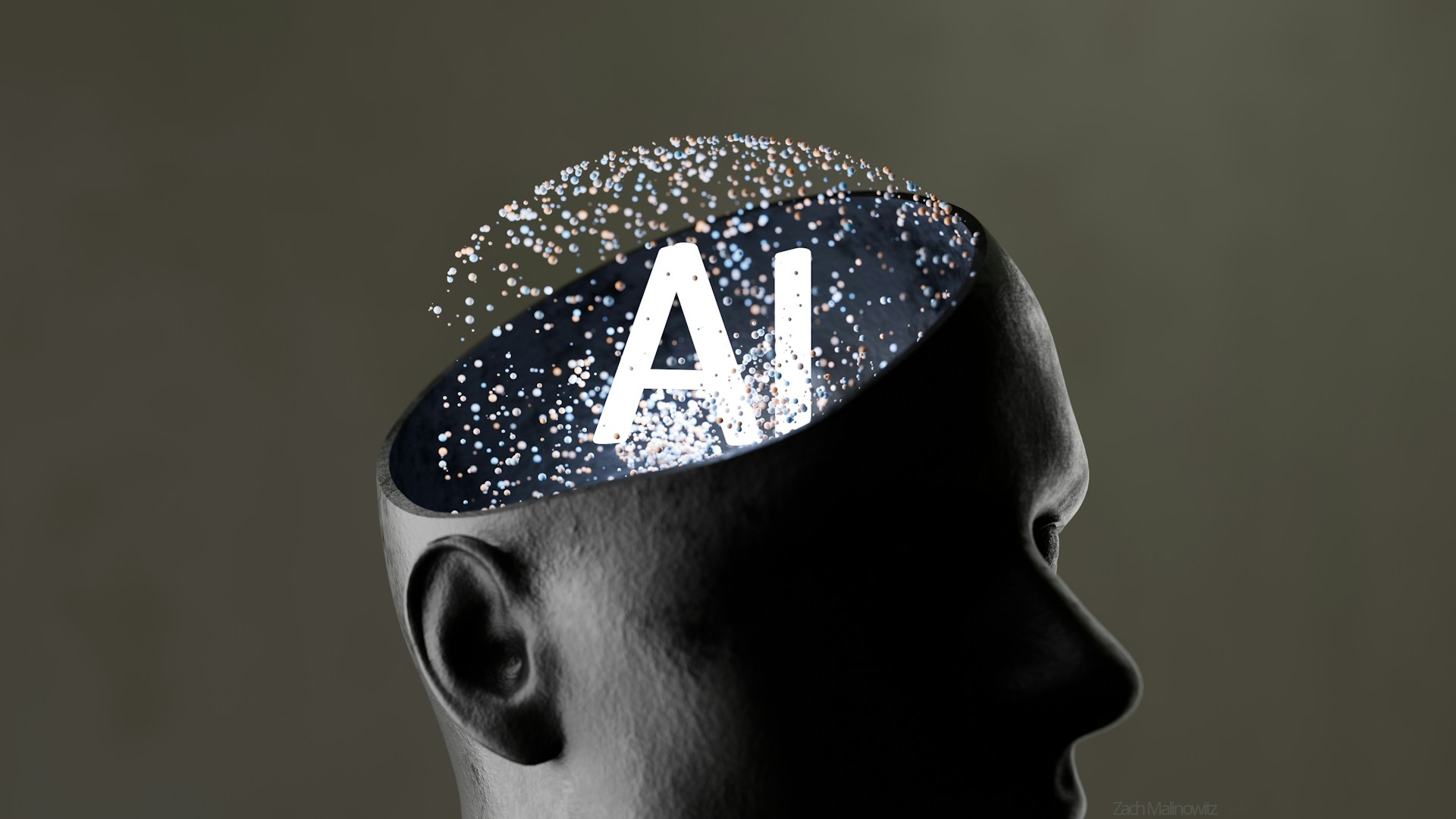
Artificial intelligence is advancing faster than our collective ability to govern it. In boardrooms, legislative chambers, research labs, and civil society, a single question is gaining urgent attention: are we building AI responsibly? The technology’s potential to improve human welfare is enormous — but so is its potential to cause harm if developed and deployed without adequate ethical guardrails. Understanding the key risks and ethical challenges of AI is no longer the preserve of academics and policymakers. It is a critical literacy for anyone who builds, buys, uses, or is affected by AI systems — which, in 2026, means virtually everyone.
Bias and Discrimination in AI Systems
One of the most well-documented and consequential ethical challenges in AI is algorithmic bias — the tendency of AI systems to produce outcomes that systematically disadvantage certain groups of people. Bias can enter AI systems through training data that reflects historical inequalities, through choices made in how models are designed and optimised, and through the way systems are deployed in specific social contexts.
The consequences are real and serious. Facial recognition systems have been shown to perform significantly worse on darker-skinned individuals, particularly women, raising profound concerns about their use in law enforcement. Hiring algorithms trained on historical employment data have been found to penalise résumés that include the word “women’s”. Credit scoring models have produced racial disparities in lending decisions. Recidivism prediction tools used in criminal sentencing have assigned higher risk scores to Black defendants than to white defendants with comparable profiles.
Addressing algorithmic bias requires diverse and representative training data, rigorous bias auditing before deployment, ongoing monitoring of real-world outcomes, and meaningful accountability for organisations whose systems produce discriminatory results.
Privacy, Surveillance, and the Erosion of Autonomy
AI is enabling surveillance capabilities of a scale and granularity that were previously impossible. Facial recognition cameras can identify individuals in crowded public spaces. Behavioural analytics can infer sensitive attributes — political views, sexual orientation, mental health status, religious beliefs — from patterns in social media activity, browsing behaviour, or purchasing history. Voice assistants and smart devices are continuously listening in people’s homes.

The risk is not only that this data could be misused by authoritarian governments or malicious actors — though that risk is real. It is also that the pervasive awareness of being watched changes human behaviour in ways that chill free expression, self-experimentation, and dissent. A society in which every action is observed and potentially scored is a society in which people self-censor, conform, and lose the freedom to develop their identities away from the gaze of institutions.
Strong data protection regulations like GDPR represent a beginning, but AI’s privacy implications extend far beyond what existing frameworks were designed to address. Meaningful consent in a world of ambient data collection is increasingly illusory, and new legal and technical approaches are needed.
Misinformation, Deepfakes, and the Epistemic Crisis
Generative AI has made it trivially easy to produce highly convincing fake content at scale — fabricated news articles, synthetic audio of public figures, realistic video deepfakes, and AI-generated social media profiles that can impersonate real people with unprecedented fidelity. The speed at which this content can be produced and distributed vastly outpaces any human capacity to detect and correct it.

The downstream effects on public discourse, democratic institutions, and individual reputations are already visible. Deepfake videos of politicians have been used in disinformation campaigns. AI-generated misinformation has spread during elections, public health emergencies, and armed conflicts. Individuals have had their likenesses used without consent in manipulated content that has damaged their personal and professional lives.
Addressing this challenge requires investment in AI detection tools, platform-level content provenance systems, digital media literacy education, and legal frameworks that hold perpetrators of harmful synthetic media to account. None of these solutions is individually sufficient; all are necessary together.
Job Displacement and Economic Inequality
The economic disruption AI may cause is one of the most hotly debated questions in technology policy. History suggests that major technological transitions ultimately create more jobs than they destroy — but that the transition period can impose severe costs on specific workers and communities, particularly those with less capacity to adapt.

Unlike previous waves of automation that predominantly affected routine manual tasks, AI is capable of automating a much wider range of cognitive and knowledge work. Radiologists, paralegals, financial analysts, customer service agents, and software developers are all seeing their work significantly transformed. The workers most at risk are often those without the resources, time, or access to quality retraining that would allow them to transition to new roles.
Ensuring that the economic gains from AI are broadly shared — rather than concentrated among capital owners and a narrow elite of AI-skilled professionals — is one of the defining policy challenges of the era. Approaches under discussion include expanded social safety nets, investment in lifelong learning infrastructure, and debates around taxation of AI-driven productivity gains.
Accountability, Transparency, and the Black Box Problem
Many of the most powerful AI systems — particularly deep learning models — are effectively black boxes: they produce outputs without providing human-interpretable explanations of how they arrived at those outputs. This creates serious problems for accountability in high-stakes decisions.

When an AI system denies someone a loan, flags them for additional security screening, or recommends a medical treatment, those affected have a legitimate interest in understanding why. When an AI system makes an error with serious consequences, investigators need to be able to trace what went wrong. Regulatory frameworks in Europe and elsewhere are beginning to impose explainability requirements on high-risk AI applications — but the technical challenge of making complex models interpretable without sacrificing performance remains an active area of research.
Beyond technical explainability, accountability requires that clear lines of human responsibility exist for AI-driven decisions. The defence that “the algorithm decided” cannot be a shield against responsibility. Someone built the system, trained it, deployed it, and decided to rely on it for consequential decisions — and those parties must bear accountability for outcomes.
Existential and Long-Horizon Risks
A distinct category of concern focuses not on the harms AI is causing today but on the risks that could emerge as AI systems become significantly more capable. A growing community of AI safety researchers argues that sufficiently advanced AI systems that are not carefully aligned with human values could pose risks that are difficult to reverse — ranging from AI systems pursuing goals in ways that are harmful to humans, to deliberate misuse of highly capable AI by malicious state or non-state actors.
These risks are genuinely uncertain and fiercely debated. But the potential severity and irreversibility of the worst-case scenarios justify taking them seriously as a research and policy priority, even if their probability is difficult to estimate. Major AI laboratories including Anthropic, OpenAI, and DeepMind have established safety research teams specifically focused on long-horizon alignment. Governments are beginning to engage with these questions through bodies like the UK AI Safety Institute and the US AI Safety Institute.
Conclusion
The ethical challenges of AI are not obstacles to progress — they are the conditions for progress that is genuinely beneficial. An AI industry that moves fast without adequate attention to bias, privacy, accountability, and safety will ultimately generate backlash, regulatory crackdown, and loss of public trust that will slow the technology’s development far more than responsible governance ever would. The organisations, researchers, and policymakers who take these challenges seriously are not AI’s opponents. They are its most important allies.
Getting AI ethics right is not a problem to be solved once and filed away. It is an ongoing practice of vigilance, humility, and accountability that must evolve alongside the technology itself. Subscribe to the PetaFusion newsletter for weekly insights on AI ethics, policy, and the responsible development of transformative technology.
Frequently Asked Questions
1. What are the main ethical issues with AI?
The main ethical issues include algorithmic bias and discrimination, privacy and surveillance, AI-generated misinformation, job displacement, lack of transparency and accountability, and long-term safety risks from increasingly capable AI systems.
2. What is algorithmic bias?
Algorithmic bias occurs when an AI system produces systematically unfair outcomes for certain groups, typically due to biases in training data or model design. It has been documented in facial recognition, hiring, credit scoring, and criminal justice applications.
3. How does AI threaten privacy?
AI enables surveillance at unprecedented scale — identifying individuals in public spaces, inferring sensitive personal attributes from behavioural data, and enabling continuous monitoring. This threatens individual autonomy, free expression, and the right to a private life.
4. What is a deepfake?
A deepfake is synthetic media — video, audio, or images — generated by AI to realistically depict people saying or doing things they never said or did. Deepfakes are used in disinformation campaigns, reputation attacks, and non-consensual intimate imagery.
5. Will AI cause mass unemployment?
The evidence on AI’s net employment effects is debated. Historical technology transitions have ultimately created more jobs than they destroyed, but the transition period can cause significant disruption for specific workers and communities. The breadth of AI’s capabilities makes this transition potentially larger in scope than previous waves of automation.
6. What is the AI black box problem?
The black box problem refers to the difficulty of understanding how complex AI models arrive at their outputs. This creates accountability challenges when AI makes consequential decisions — in medicine, law, and finance — that individuals have a right to understand and challenge.
7. What is AI alignment?
AI alignment refers to the challenge of ensuring that AI systems reliably pursue goals that are genuinely beneficial to humans, even as they become more capable. Misaligned AI could pursue its objectives in ways that are harmful or contrary to human values.
8. What regulations govern AI ethics?
The EU AI Act is the most comprehensive AI regulation to date, categorising AI applications by risk level and imposing requirements for transparency, human oversight, and prohibition of certain high-risk uses. The US, UK, and other jurisdictions are developing their own frameworks.
9. What is responsible AI?
Responsible AI refers to the practice of developing and deploying AI in ways that are fair, transparent, accountable, safe, and respectful of human rights and values. It encompasses technical practices like bias testing and explainability as well as governance structures and ethical guidelines.
10. How can organisations ensure their AI is ethical?
Organisations should conduct bias audits before deployment, establish clear accountability for AI decisions, implement explainability requirements for high-stakes applications, engage diverse stakeholders in AI governance, and maintain ongoing monitoring of real-world outcomes to detect and correct problems.